|
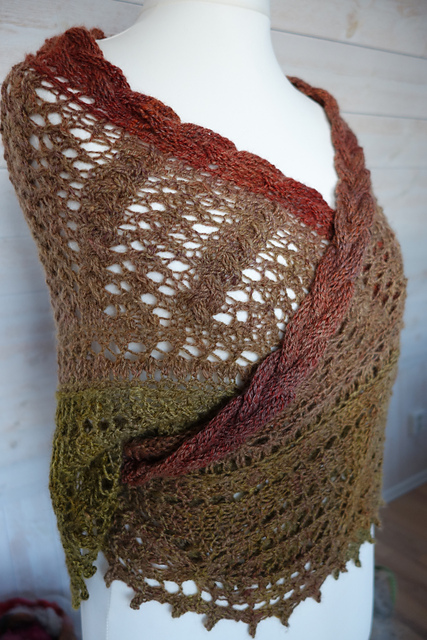
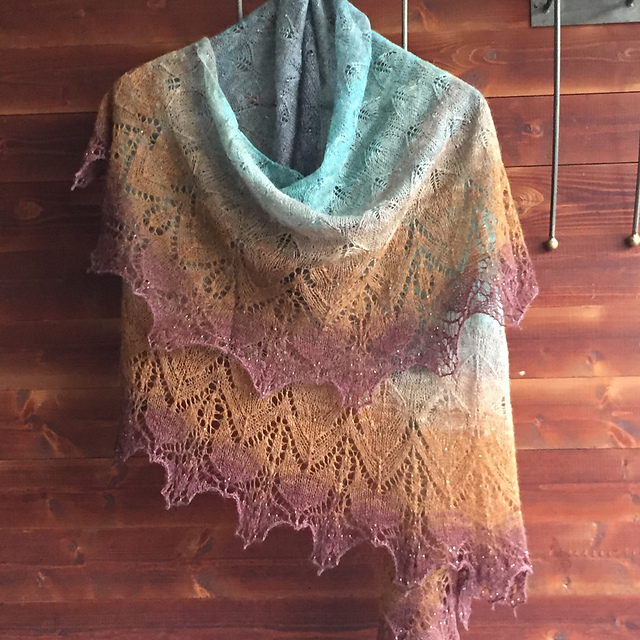
Back in March I set the members of the Hilltop Cloud Ravelry group a challenge. I called it In5pire. The group has always been focused on sharing what we make, so I wanted to do something to celebrate the 5th anniversary of Hilltop Cloud that was all about sharing, making, and was something that anyone could join in with. The challenge was to take one of the images I put together on a special Pinterest Board, and to use one of them as the start of a design process. They could create whatever they wanted, but they had to document their progress! 58 people took part, and an amazing 21 got their projects finished by the June deadline. There were art yarns, gradients, lace weight, cabled yarns. Some designed their own patterns, others ventured in to free form knitting and weaving, other used classic pattern drafts. The one common thread were the set of inspiration images, na that they were all using Hilltop Cloud fibre. If you have some spare time then it's worth browsing through the thread, or if you just want the shortened version this link just shows posts containing photos. It's well worth looking through. After a short delay, while I travelled up and down the country teaching, I finally managed to sit down with Jill Shephered aka. wriggglefingers (who rather handily is also a spinning tutor, and used to teach Design in schools). There were prizes on offer, not for the most technically difficult project, but for the one we felt showed the most evolution, the most problem solving skills, and the most thorough testing and documentation. It was really tough as so many of the entries had done an amazing job. In the end our winner was this shawl.
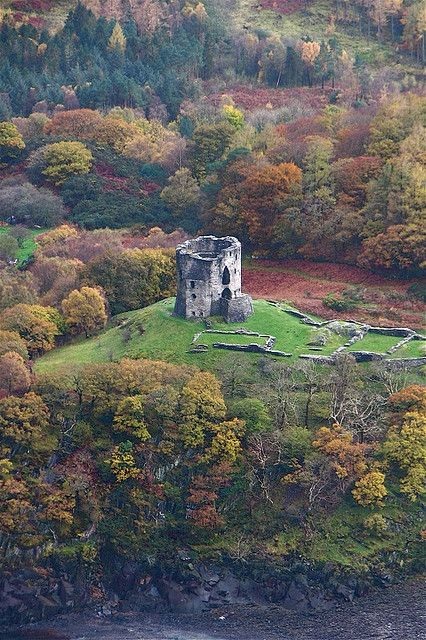
It was designed by Anne-Lise. She had already spun her yarn before the challenge started, but the motifs used in the shawl went through a huge number of changes while she settled on the right combination. From her project notes- My inspiration is this one, which inspires me because it is both nature and culture, new and ancient, it is still here and at the same time lost to us. I will try to incorporate those thoughts into the design. April 20, 2016Have been swatching. Barbara Abbey tells us in her book “Knitting Lace” that she has collected old, as in 1850’es old, knitted lace patterns for a long time, and in this book presents the ones she likes the best. She says many are very old, but she never once mentions her sources. I have found a very nice edge pattern in the book, which is presumably from a very old source. I have no way of finding out. It might be from Weldon’s Practical knitter, or from Miss Lambert’s “Knitting Book”, or it might not. I found a similar, but also quite different edge in Barbara Walker’s treasuries, where it’s called a Portuguese edging. I swatched both edgings to see if the yarn liked them. They are both garter stitch, and I tried that, and then I tried st st, and the pattern definitely wants to be garter stitch. None of the patterns were really completely as I wanted them (odd holes and weird beginnings), so I have been spending the day trying to cook up my own version. I found a nice way that fit the number of rows I needed, but I want to let it rest over night to see if I really like it… May 10, 2016Swatching the body stitches, I was thinking about other historical evidence in Wales, going further back. Romans, certainly. Roads and forts. I swatched the “Roman stripe” pattern from Barbara Walker, the yarn liked that a lot. I also swatched two other patterns that looked promising, a brioche stitch and something I thought might look like stone walls, but they didn’t work at all. Vikings, certainly. Raids and stories… We could let some cablework symbolise the Vikings, and as they would have been using arrows to defend themselves, it fits well with an arrow-and-cable combination. I swatched and found that it would be nicer with a 3-braid than a 2-braid, and I will probably add some purled sts on either side of it to make it stand out better. But the yarn liked it a lot. So, there we have all the elements, now I can begin knitting! Of course, things never go smoothly, and it was lovely to see how the design evolved. The finished shawl just spoke to me of Wales, in a way that I can't really put in to words. I know Anne-Lise is currently working on writing up the design, and I think I will need a version of my own. I knew it was going to be hard to pick just one winner, so also said that there would be a runner-up prize.
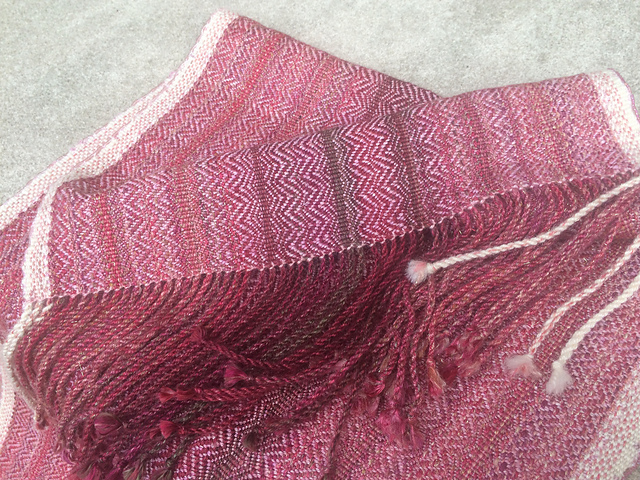
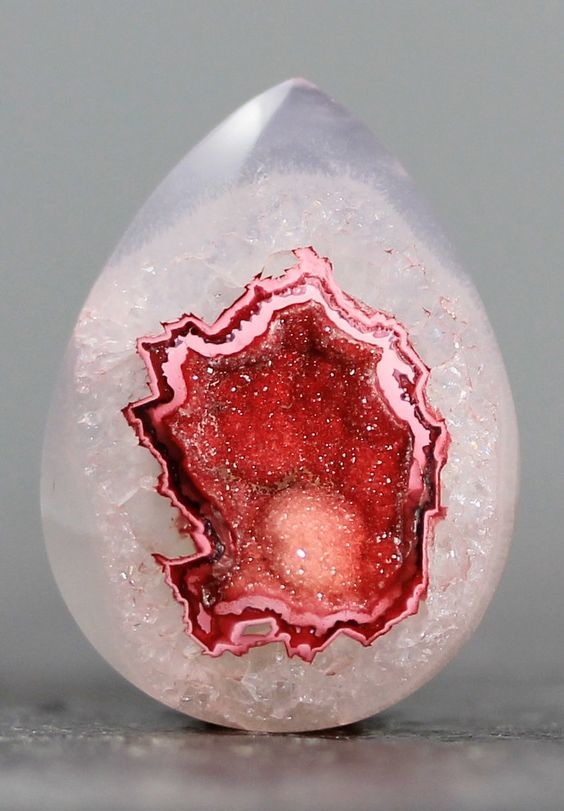
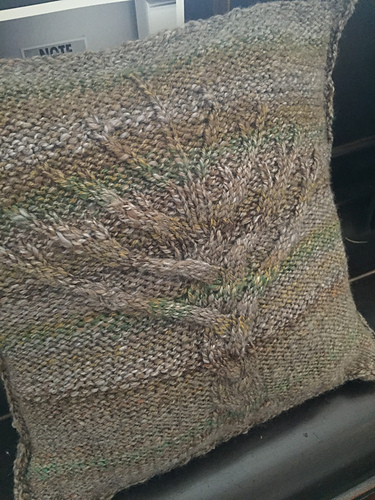
This Rose Quartz inspired a lot of people, but Carrie's interpretation in to weaving was stunning. Her pattern draft, the manipulation of the silk & kid mohair skeins she spun to match the colouring, the use of a sparkly fibre at the edges, it all makes for a beautiful project. A few other projects also caught our eye...
There was also a random prize, and it was won by Kate. Her free-form weaving was a really strong contender in the judging, and has definitely inspired me to actually do something with those old pictures frames I'd been saving for just this purpose! 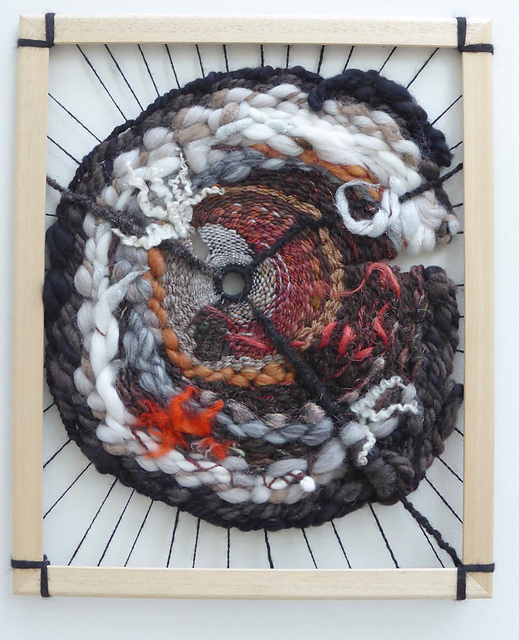 I can't think of a better way to bring the end of my 5th anniversary celebrations to a close. I love what I get to do on a daily basis because I love seeing how my fibres get transformed. Fibre can be beautiful to look at, but until you turn it in to yarn, and then turn that yarn in to stunning, useful objects it's not reached its full potential.
If you joined in the challenge, thank you so much. Even if you didn't finish, thank you for sharing your knowledge. If you didn't join in, do go and read the thread, click through to the project pages, favourite the ones you like, and leave some comments. Oh, and watch this space... apparently they'd like to do it again in a little while!
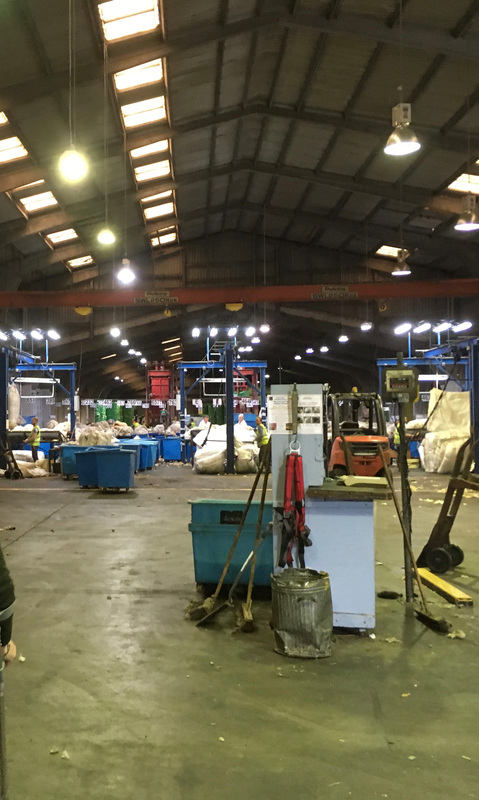
Each and every single fleece is graded by a specialist. It takes 5 years to train how to sort wool to the standard required. Once the wool sheets have been unpacked and graded the fleeces are stacked in to these blue bins. When a bin is full it's loaded up in to the red machines in the background, and they compress the wool in to the giant green bales in the background. It's these that are sold in the global auctions, each containing a huge number of fleeces. 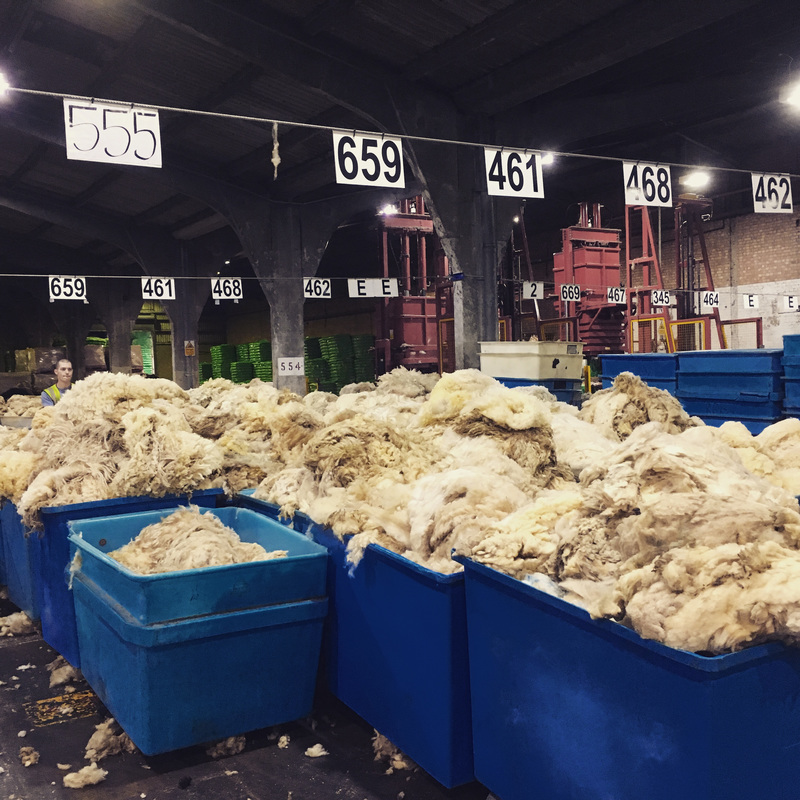 We're a hill farming area, so unsurprisingly there were a lot of coarser fleeces, but mixed in were some real treasures. Our fleeces were donations, so we were quickly ushered past the BFL bins, they're too valuable to give away. I don't think we did too badly though... 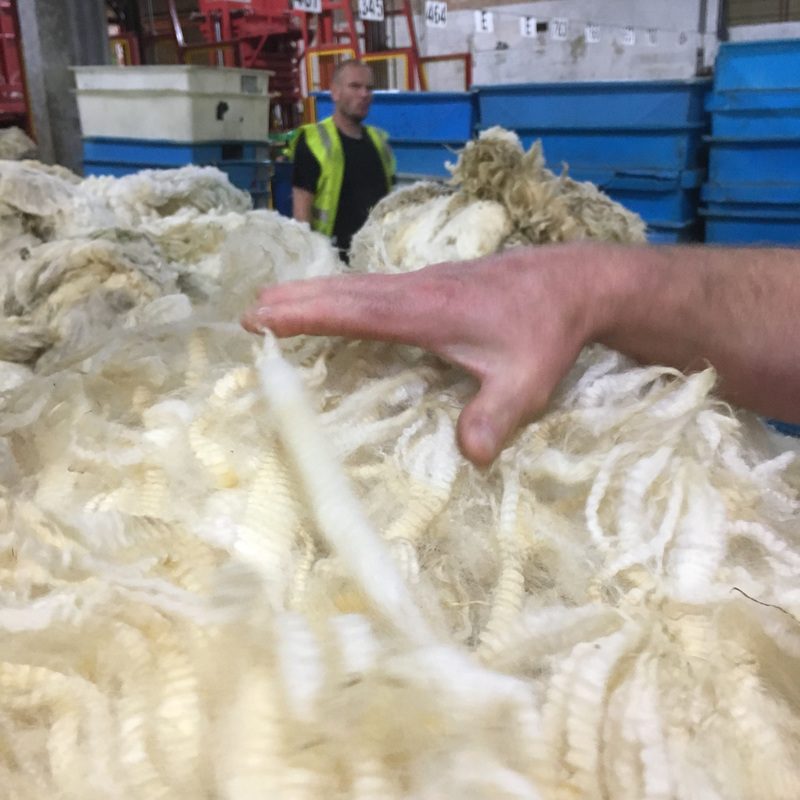 This was a bit full of beautiful Welsh Mule Hogg fleeces (i.e. the first shearing of last years lambs). A mule is a sheep from crossing a BFL Ram with a Hill Breed Ewe, and if you can get a fleece from a young sheep like these then the fibre is really stunning. We also collected a few more breeds that are typical of the area. These are now all washed, and displayed so that people can handle real wool, and see what it feels like. 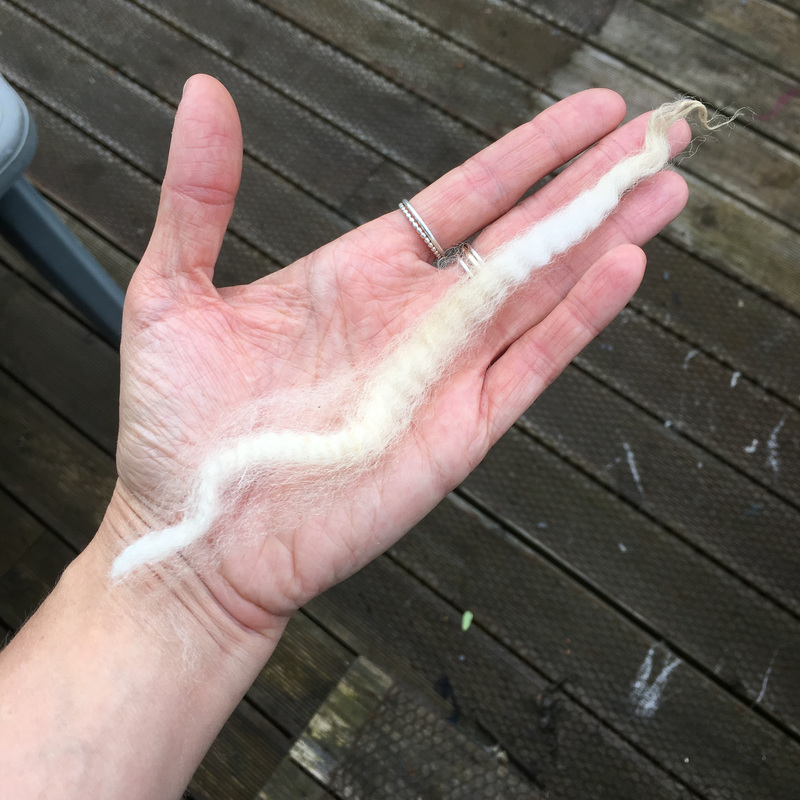 The depots are open to the general public, and if you go for a visit explaining you're a hand spinner you're in for a real treat. Probably best to ring first and check it's a convenient time, and if you get a group together you can often get a guided tour.
In the Newtown depot there was even a bin of coloured Shetland pulled to one side specifically to sell to hand spinners who call in, as the depot manager knows he can get a better price that way, because coloured wool isn't generally wanted by the large scale commercial buyers at auction. Last year for the Tour de Fleece I created special colour way for Team Flossy (Hilltop Cloud). It was a Gradient Pack called Cobblestones, inspired by the minted colours you get on set stones when they're used as a road surface. The general look of the colour way was muted grey, but with a bit of a rainbow lurking underneath. 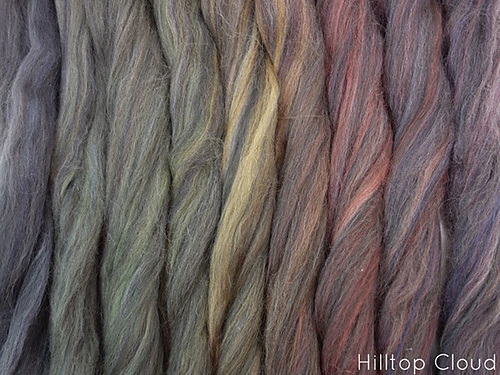 I had 3 packs, and spun the yarn in to a 2 ply fingering weight. Two packs I plyed with each other to make one large gradient skein (actually 2 skiens as 280g is too large to wind on a niddy noddy). The 3rd pack I split in to quarters, and spun it in to 2 matching shorter skeins, each containing half a pack. 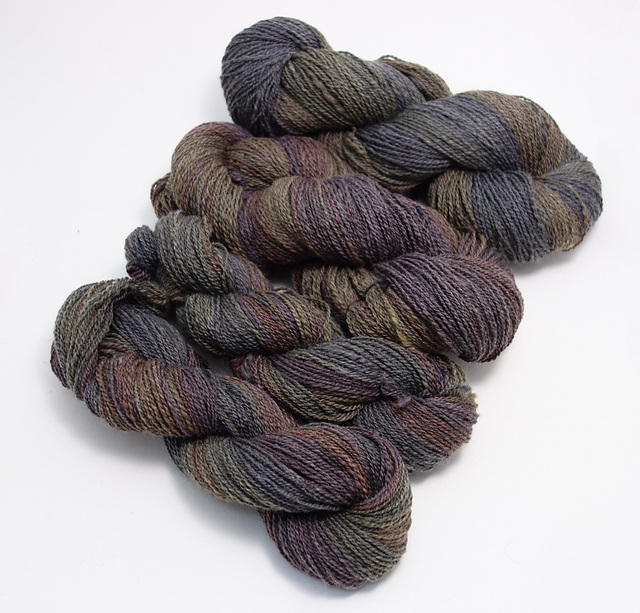 The big skeins were for the body of a jumper, and the shorter skeins were for matching sleeves. 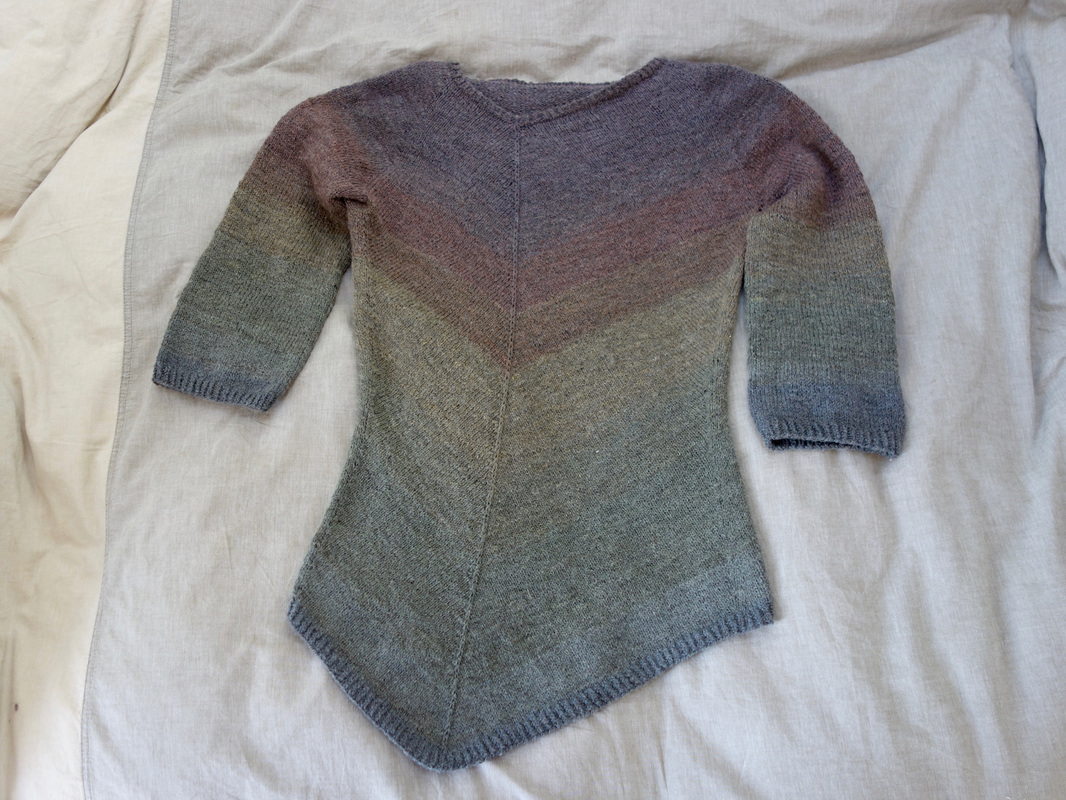 The end result is a gradient jumper, with matching long sleeves. Isn't being a hand spinner useful at times! 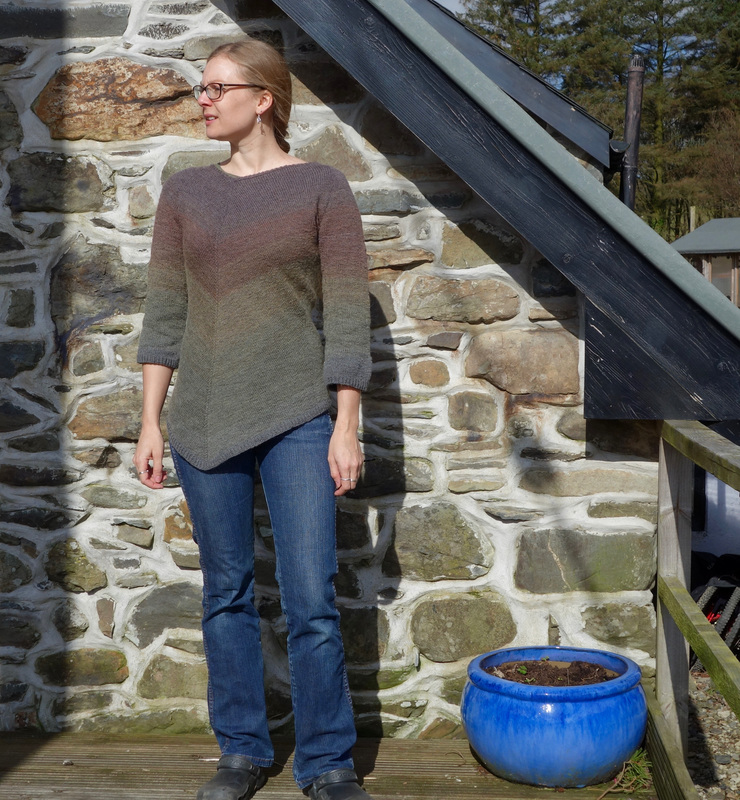 The original pattern (Sugar Maple) uses cap sleeves so that you don't have to worry about matching sleeves when using hand dyed yarn. It's a top down pattern so I put the stitches on holders instead of casting off, and then joined in my sleeve skeins. I used up every last bit of the yarn for the sleeves, but I didn't use all of the body yarn as it was getting a bit long. 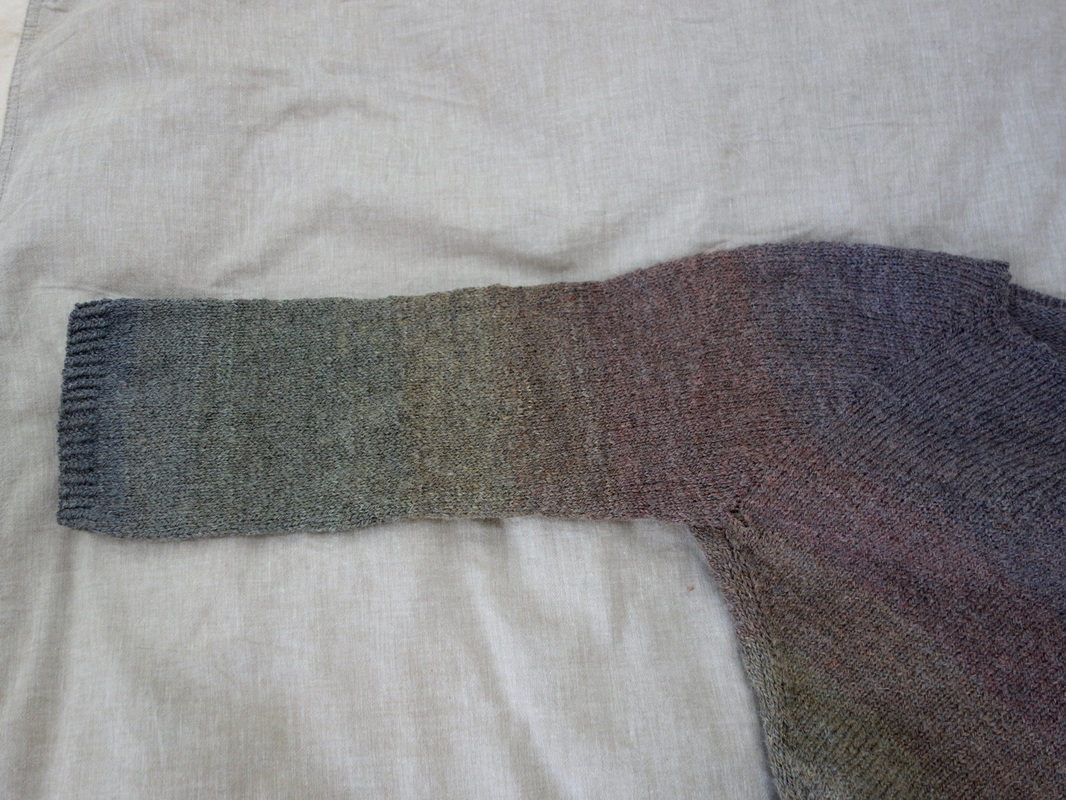 My Ravelry project page can be found here- http://www.ravelry.com/projects/hilltopkatie/sugar-maple-2
As I might have mentioned previously, there's been lots of behind the scenes stuff going on recently. One of which has been developing a new workshop. There's a lot that goes on when I come up with teaching ideas. After all there's a whole day to fill, and I like to make sure it's done professionally. That means writing a plan, creating visual aids, and quite often coming up with samples to show to people. It takes days when I add it all up (good job I don't really, I teach because I love it, rather than because it makes any sort of monetary sense!) The latest workshop I've developed is called Spinning with a Purpose, and it's designed to get people to think about their yarn rather than just spin something and hope it works. It focuses on woollen vs. worsted, the effect of ply number, and why sampling is a "good thing" particularly when spinning for a garment. We also dissect lots of commercial yarns to really work out what the industry means when it describes something as DK weight. There's quite a lot of things that we're always told are true, but it's nice to have concrete proof in front of you, so to that end I've been spinning and knitting a small mountain of swatches. 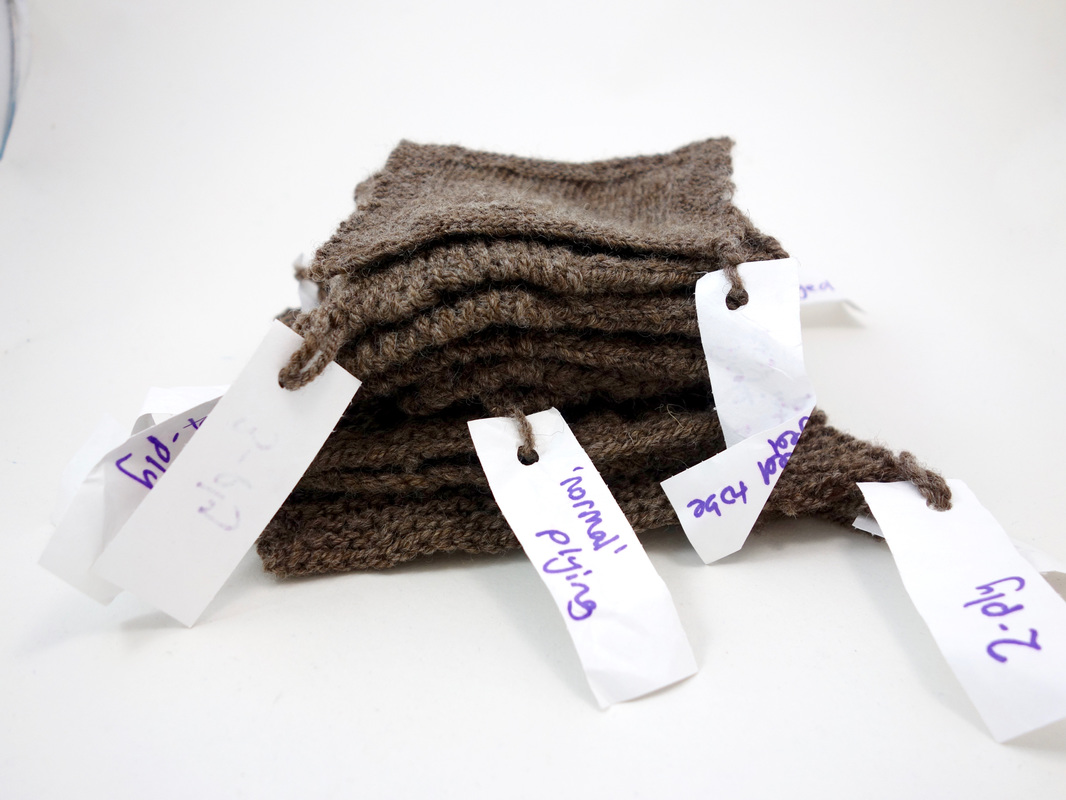 ,In an ideal world nothing beats handling them to really get a feel for how they work as fabric, but I thought I'd share them via the blog as well. There are a lot, so this will be a semi-regular series of posts for a while. One of the things that I hear quite often at guilds when I visit, and read even more online, focuses around leaving singles as singles. A single is just 1 ply, just one length of yarn. It will be what is sat on your bobbin before plying. Singles yarns are great, they're quick to spin, make a lovely fabric, but they are something you have to plan for. And it's the planning part that I wanted to illustrate with swatches. 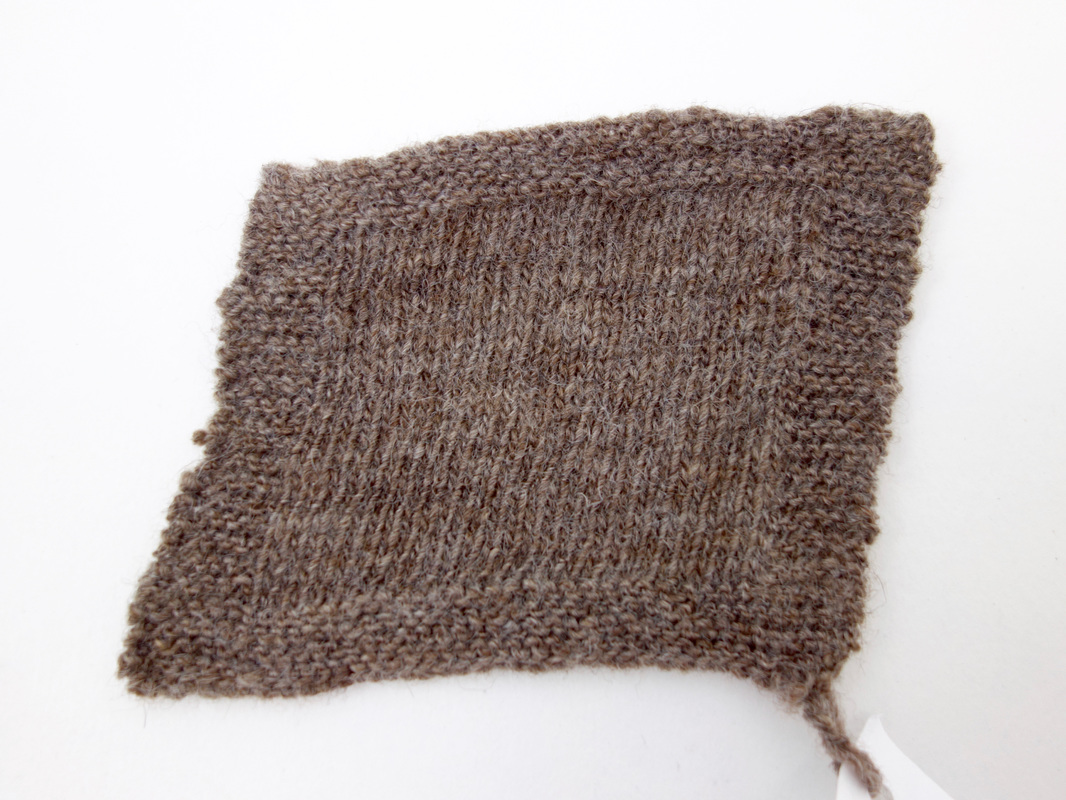 I always sound like a bit of a grumpy guts when I tell people that if they want singles yarn they need to have spun it with an appropriate level of twist for it to be a singles yarn. If you intend to ply, then your singles need enough twist for them to hold together during the plying stage. That level of twist will be much too high for you to be able to use the singles without plying. Not unless you want a fabric that looks like the one above. That swatch was square when knitted, there are no sneaky increases and decreases hidden the borders! Twist is stored energy, and when you knit with it that energy causes the fabric to lean more in one direction. It means that any item you make will also lean and twist. If you spin a yarn intending for it to be a single you put in less twist, the yarn will always be unbalanced, as normally you ply to even out the twist energies. But if you spin for a single the twist level is significantly less, and the final fabric will have minimal skewing and twisting. And no, you can't just hang the singles up with a weight dangling from them. The only people who should treat yarn that way are weavers. If you're a knitter hanging a weight from your yarn as it dries will just cause you even more problems. As soon as you get that yarn wet again you reactivate all that twist, and the item will be just as skewed and twisted. So in short, don't do it! If you want to spin singles you need to plan to spin singles, not just decide to do it later because you can't make a decision about plying. 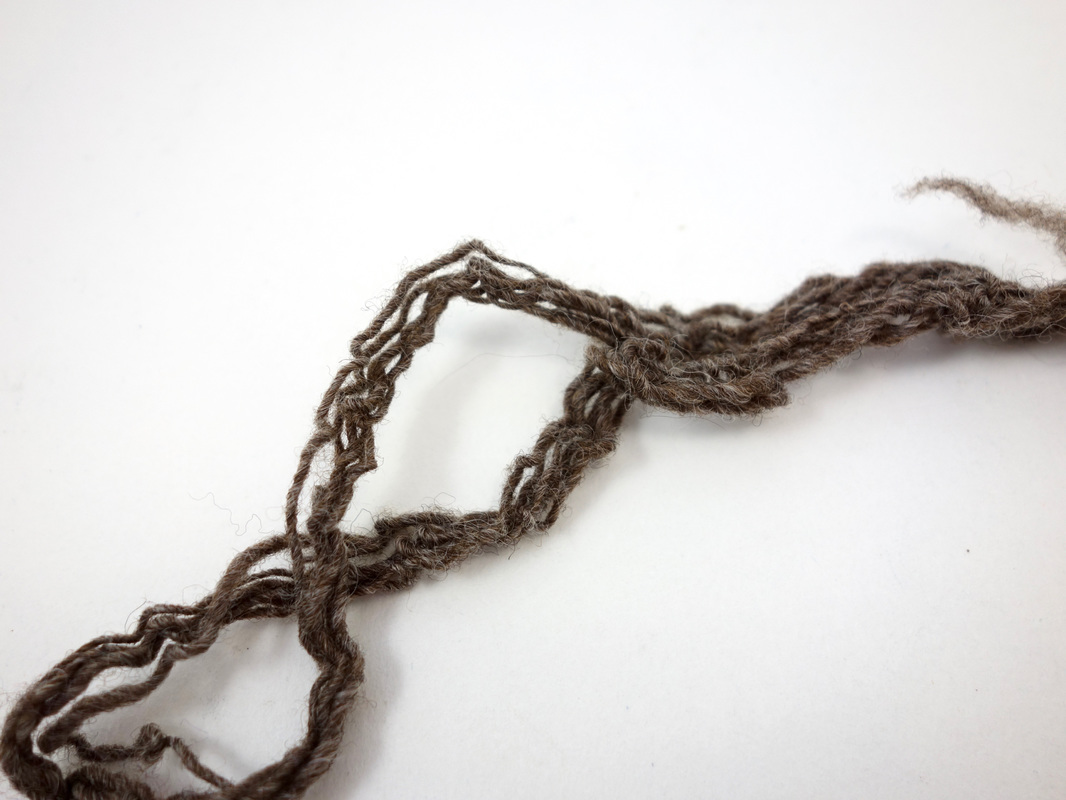 Here's a close up of the singles used to knit that swatch. They're not exactly mega twisty...
I tend to like my yarns when the singles aren't too tightly spun, and tend to put slightly more plying twist in. Purely personal preference, but I find it gives me a nice durable fabric as the ends of the fibres are trapped by the other ply, but it's still soft due to the lower twist in the singles. If spinning singles sounds like your sort of thing then the Winter 2015 edition of Ply magazine is a must read. You can buy it direct from the Ply magazine shop, or if you're in the UK or Europe it's cheaper to go direct to Janet at the Threshing Barn. I'm going to get all metaphorical, but this month has felt a little like working a piece of stranded colour work. Everything looks nice and lovely and pretty patterned on the front, but at the back it requires good, even tension, and a lot of hidden strands. It's been a month where I'm not entirely sure where the days have gone, there's been a couple of workshops teaching at other guilds, some dyeing for the online shop, but earlier than ever, I've made a start on the dyeing for Wonderwool Wales. I've always been an organised sort when it comes to shows, but being ill over the past 6 months has made me even more organised. I never quite know when work isn't going to be possible, so I'm trying to get ahead while I still can. Blogging is one of the things that got neglected this month, mostly because everything has been very mundane, and just not worth sharing. Today however, I do have something to share! 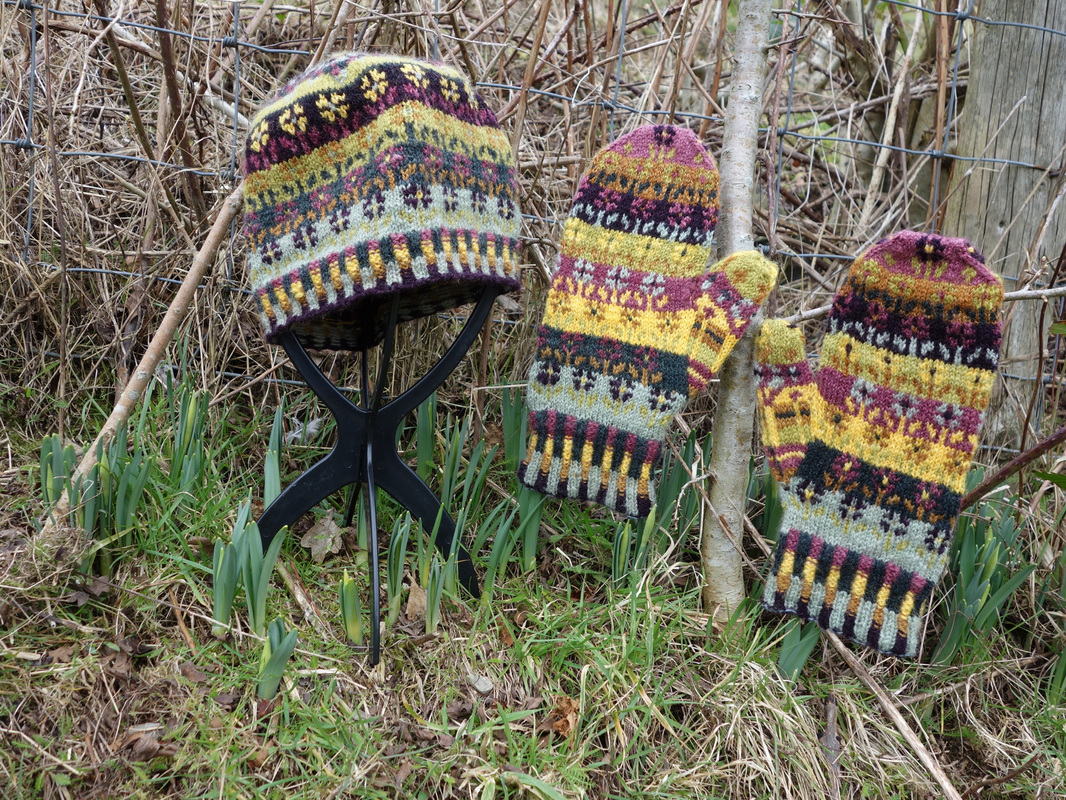 Just like my metaphor, they're stranded colour work. Made from a single Bach Pack in the Shale Colourway. I made the cuffs/headband and the first colour repeat to match, but then after that just played around with colours swapping and changing them for the background, leaves, and flowers. In the end I had 26g of yarn leftover! 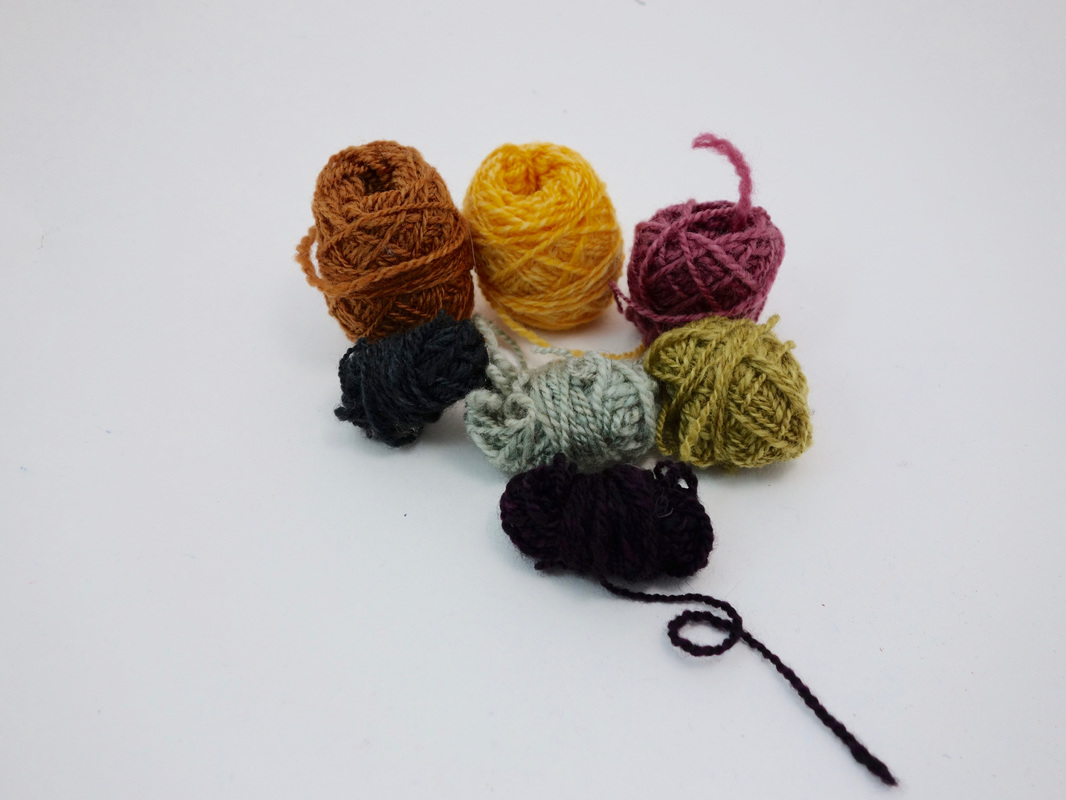 I've had Back Packs on my mind recently as I also came up with 3 new colourways to expand the palette a little. 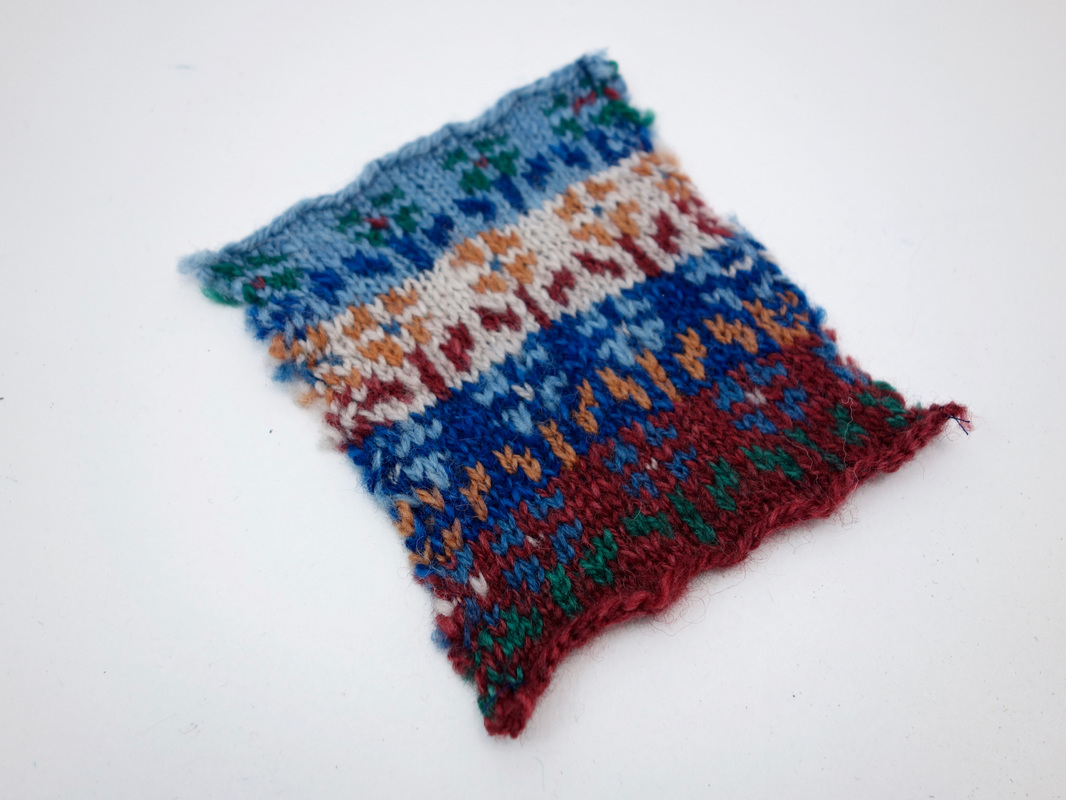 Moroccan Tiles contrasts rich ultramarine blue with terracotta reds. 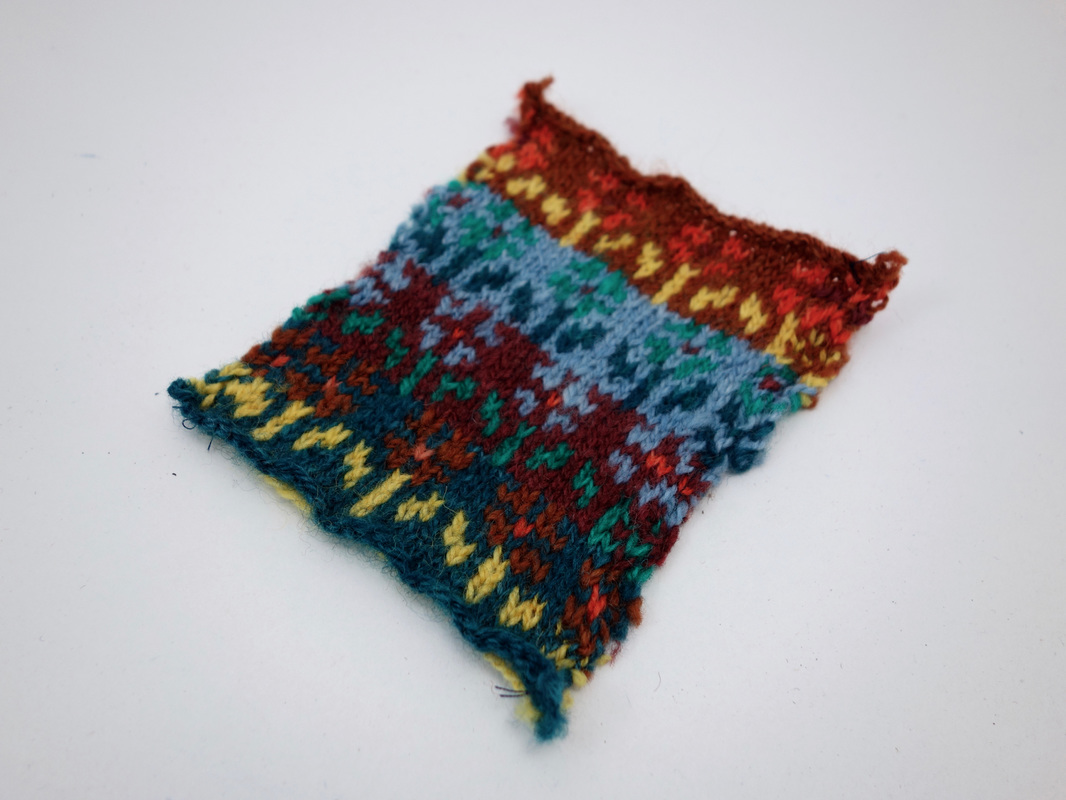 Firebird features jade green and turquoise together with hot oranges. 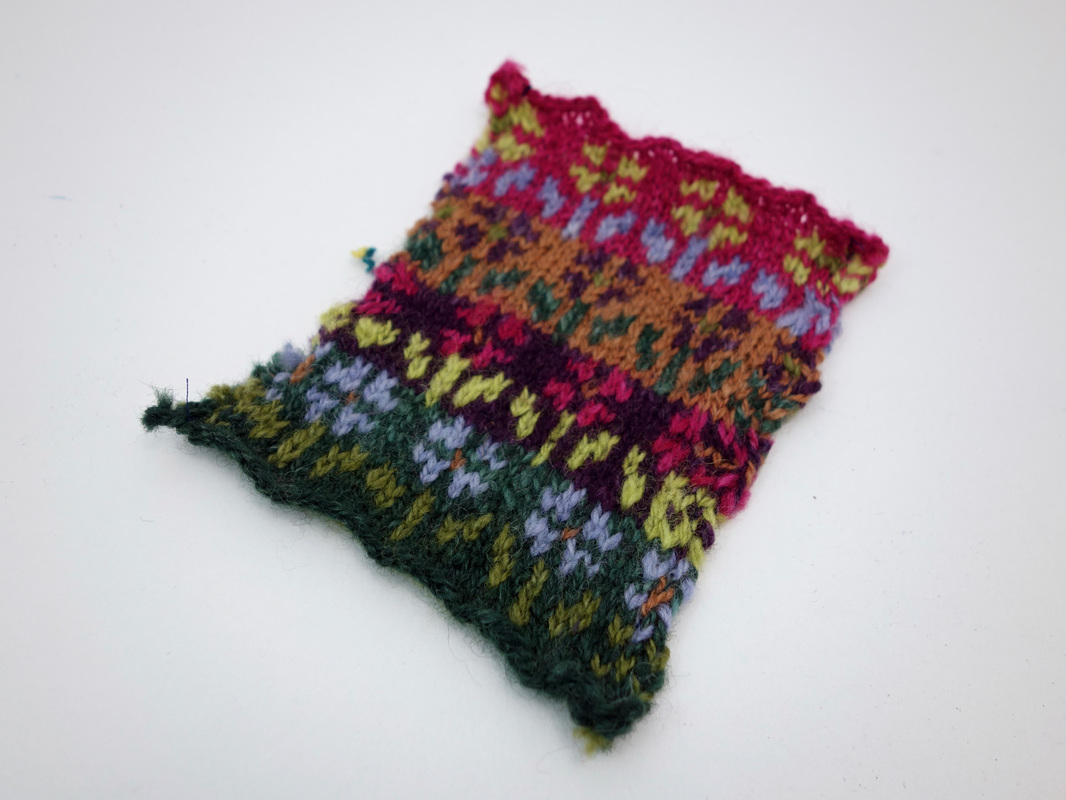 Wildflower is a more natural palette, heavy on the green, with floral accents.
To celebrate getting through February I thought a little contest would be just the ticket. I want you to share the pattern you'd love to make most out of a Bach Pack. Remember they contain 140g, and 7 shades. You don't have to find a pattern that uses all 7 colours, but if the pattern uses more than 20g of any 1 colour you need to explain how you'd swap the colours around to make it work! The winner will be drawn at random a week today, and will get a Back Pack in the colour way of their choice, plus the Peerie Flooers Mitten and Hat Pattern. Entries are now closed, the random number generator picked comment number 3, which was OrganisedKnots. Thanks for all your suggestions everyone! I'm really pleased to be able to introduce my brand new fibre base... 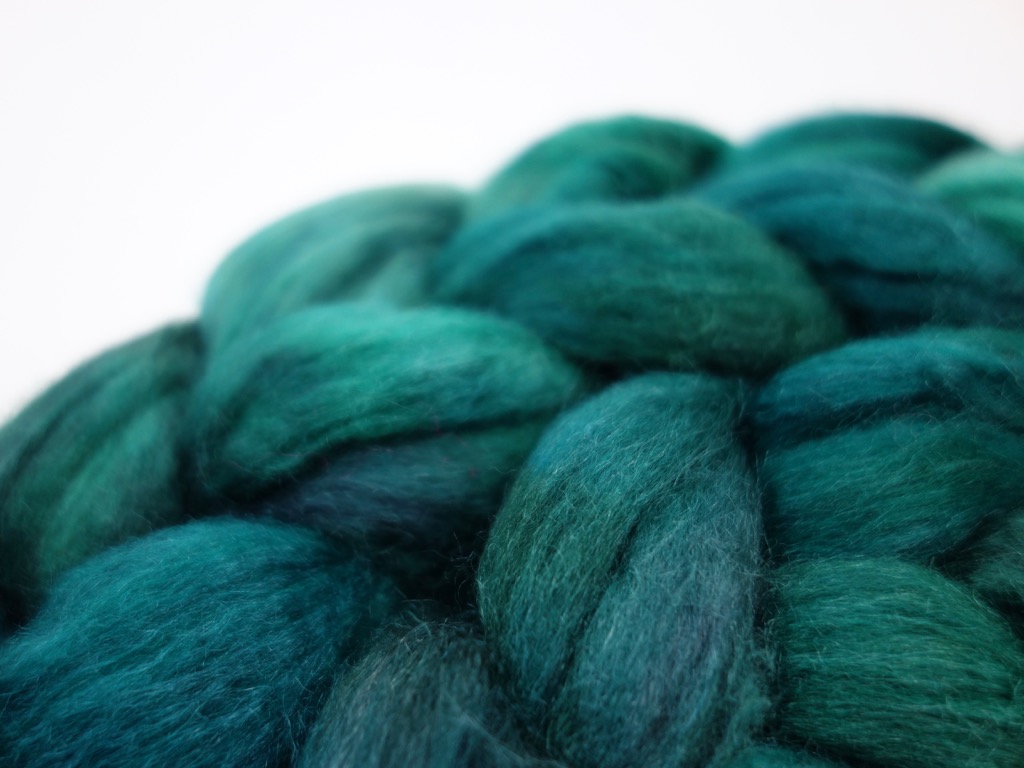 I started testing it out back in the summer, and also gave some to a few trusty local testers. They all loved it, so here we are, a brand new fibre for Hilltop Cloud. 50% 23 micron Merino 50% Tussah Silk Just like with all my other blends it's a combination I've had specially created. I wanted a wool-blend fibre with a high silk percentage. This fibre is ideal for next to skin purposes, so shawls, scarves, hats etc. You can spin it in to lace weight with ease, but it will also work as a thicker yarn. The high silk content gives you the fantastic sheen you get from silk, and allows me to dye incredibly intense colours, but by adding in some wool it makes it a bit more approachable for people to spin. You also get the bounce and memory that wool offers compared to the pure drape of silk by itself. I thought long and hard about the wool fibre I wanted to use in this blend, in an ideal world I would love to use British wool for nearly all my blends. In reality however we don't produce of the softer wools that the market requires. In part it's due to our climate, but it's also because for too long the British wool market has been in the doldrums, and as a result wool quality isn't of great importance to many farmers. I considered using Shetland, but for many that's not soft enough to go next to skin, and the high silk content of the blend dictates that this is what I feel the fibre is best suited to. I also considered using BFL, traditionally the BFL on offer in the UK has been the ideal Merino alternative, but increasingly I'm becoming more and more unhappy with the quality of the BFL tops I can buy. The fibre is no longer as soft and long as it was 2 or 3 years ago, and the increasing demand has pushed up the price dramatically. I'm not convinced it offers good value for money any more and I'm not alone in forming that opinion. The remaining BFL bases I offer will be sticking around, but in this situation I wanted to use a different fibre. In the end I've plumped for a 23micron, natural grey Merino. This coloured wool adds a wonderful depth of colour to the dyes, and is lovely and soft. One of my testers can't normally were wool of any kind, but her finished skein of yarn goes around her neck quite happily. I'm not normally a pure merino fan, particularly if you buy the commercially dyed tops, they've had all the life processed out of them and feel like spinning cotton wool. This merino feels very different, it has a lovely crimp, bounce and is a delight to spin. This is usually the point that I show off a finished sample of the fibre knitted up... my ill health over the past month put the brakes on any knitting, so you'll have to make do with an on the needles shot! 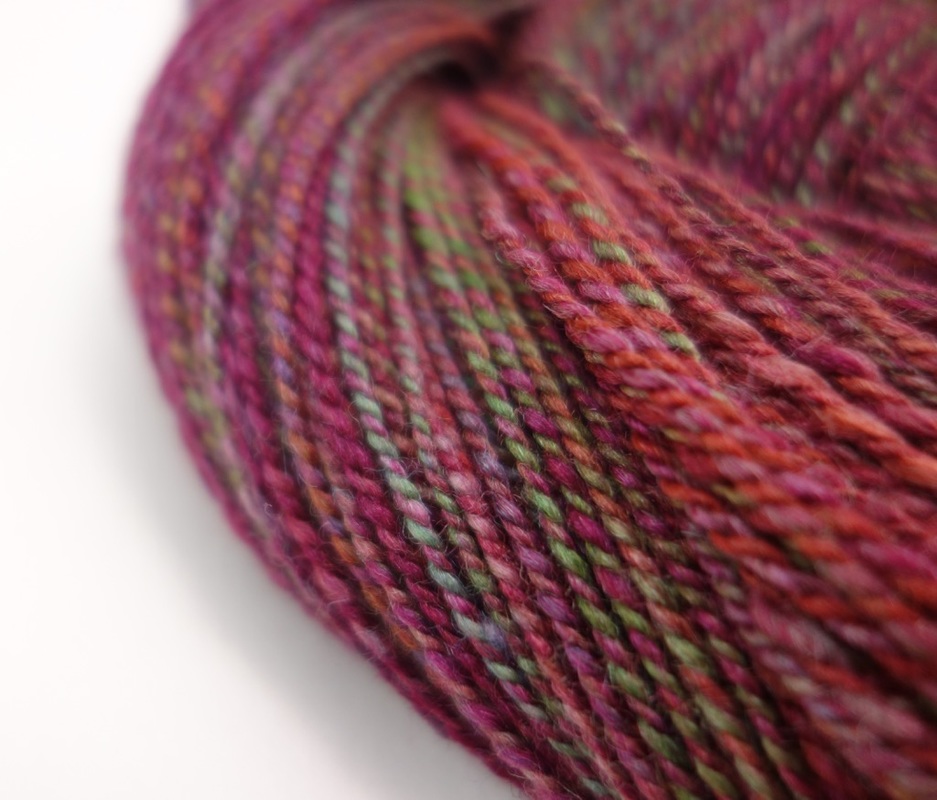 I spun the yarn in to a 2-ply sport weight yarn, and am knitting it in to a lovely cozy garter stitch fabric. 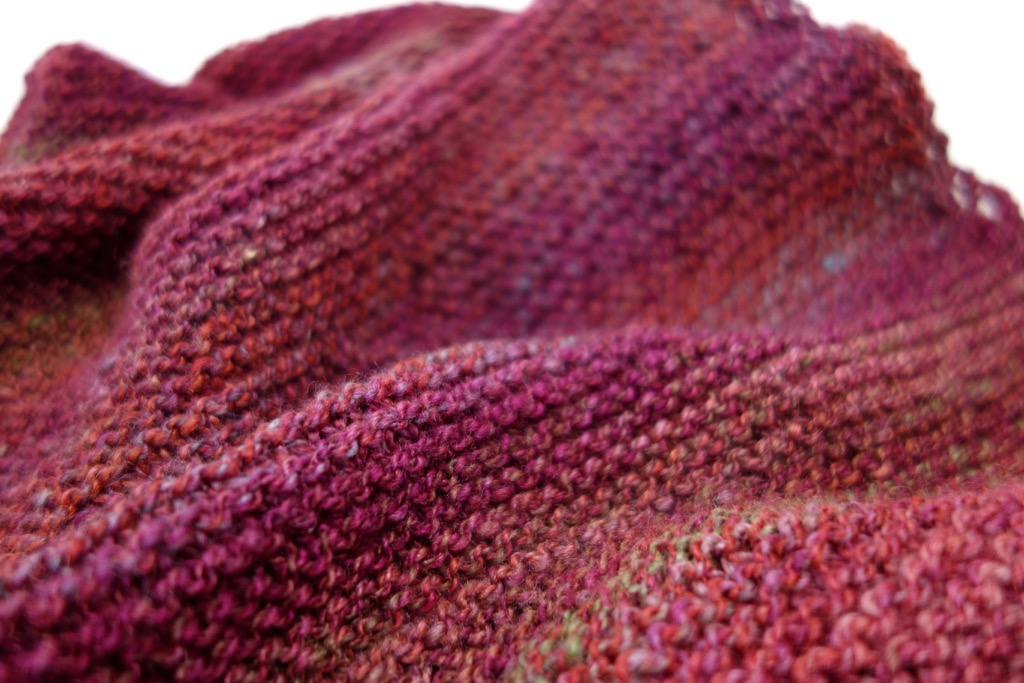 The new Merino & Silk fibre is available to buy in the shop now!
Last year when I got my Hansen mini spinner it became pretty clear that it was going to become my go-to portable spinning wheel. I've since taken it all around the country in my trusty wooden box! 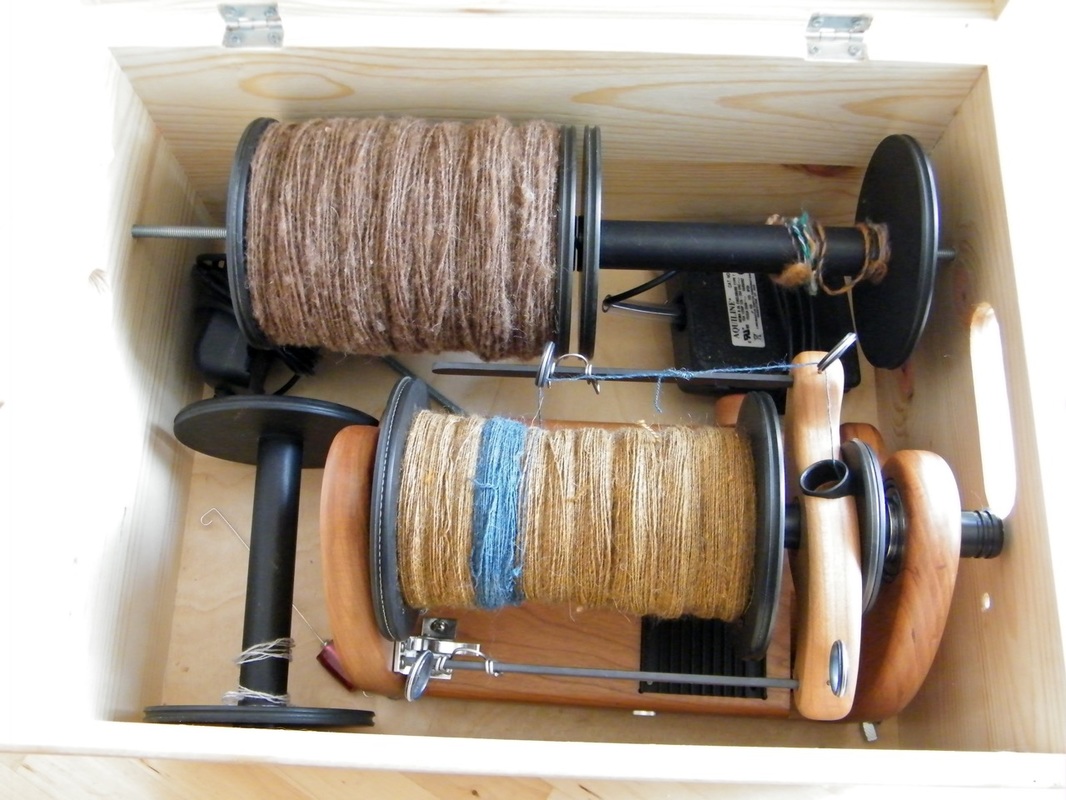 I can tuck everything I need inside the box, and have it set up to use as a lazy kate, and it will also act as a table for me to put the Hansen on whilst I spin. Overtime however, my box has started to look a bit tatty, and I fancied smartening it up a little. 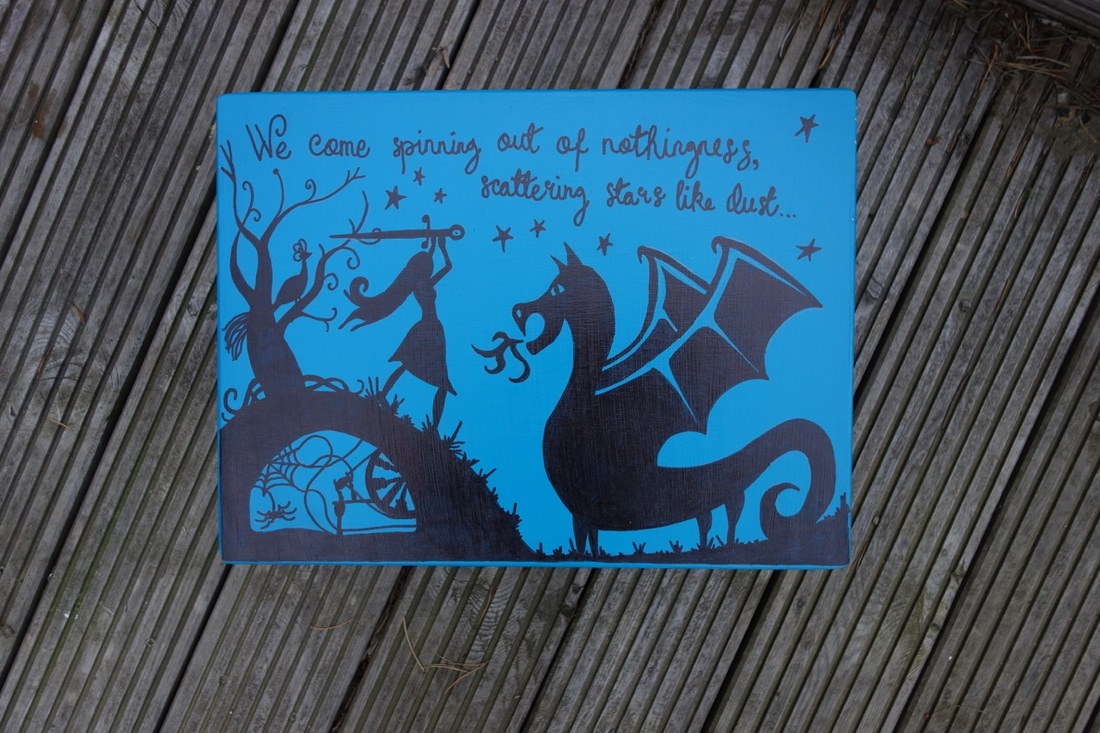 On the top... a bit of inspiration, a reminder that when we sit down to spin we create wonderful things from unpromising beginnings. 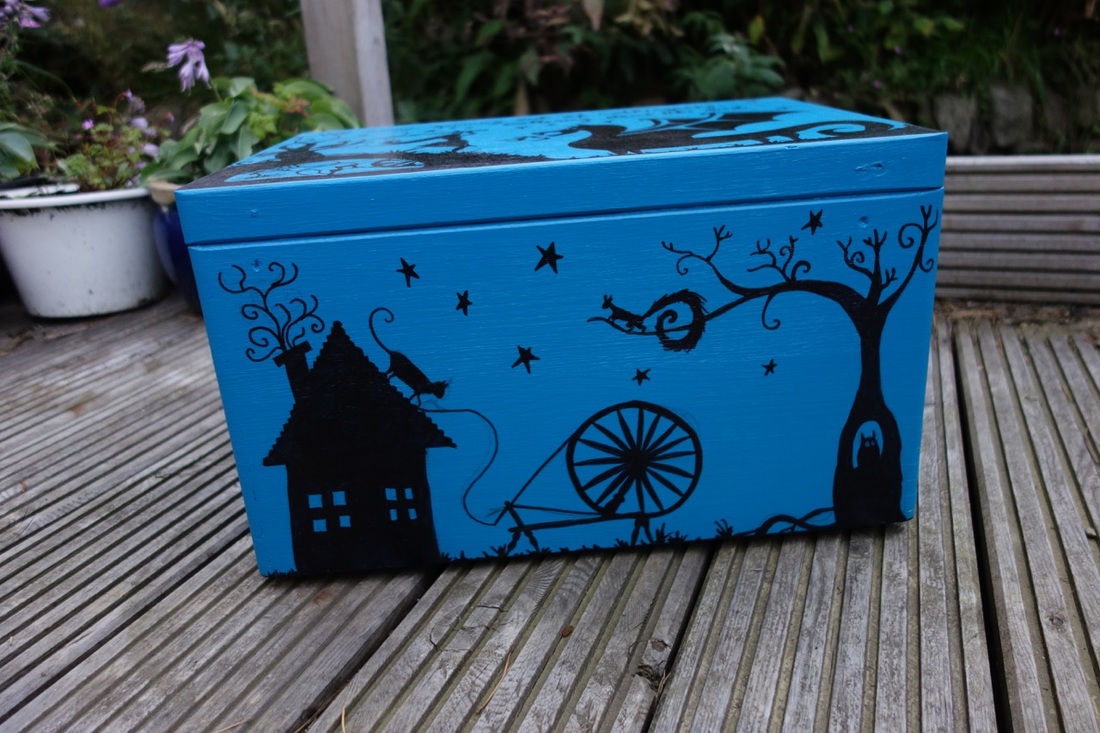 On the first side, a reminder of the first spinning wheels, the Great Wheel, which is being "helped" by a version of Viola the cat. A squirel up the tree, and a Tawny Owl watch on. 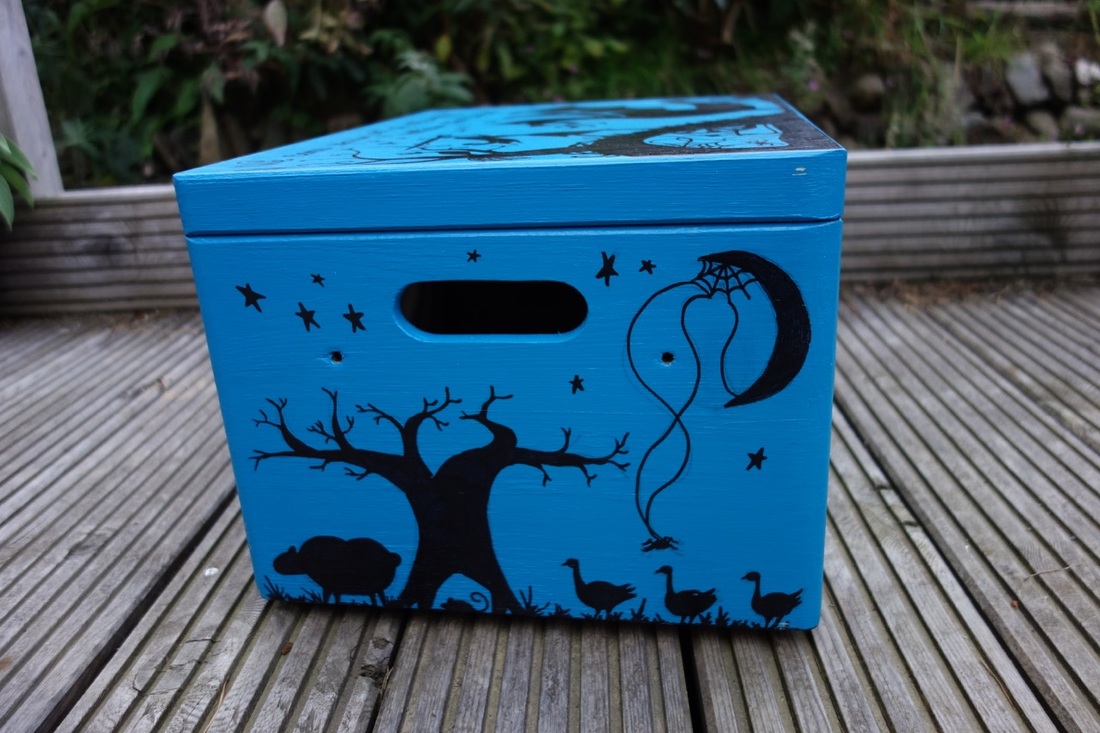 On this side there's a version of Flossy the Hilltop Cloud sheep, and some of the ducks from a local farmyard. 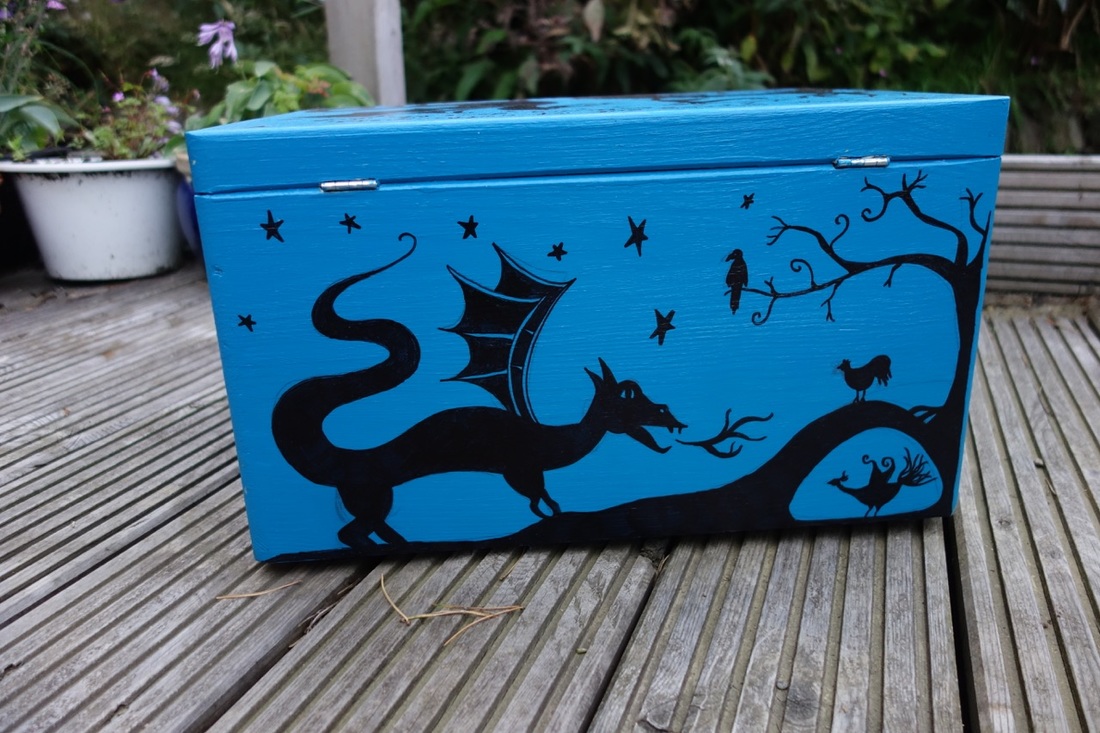 On this side a Welsh dragon is acting tough, but is being faced down by one of my cockerels. A stylised version of Cav is hiding in the tree roots. 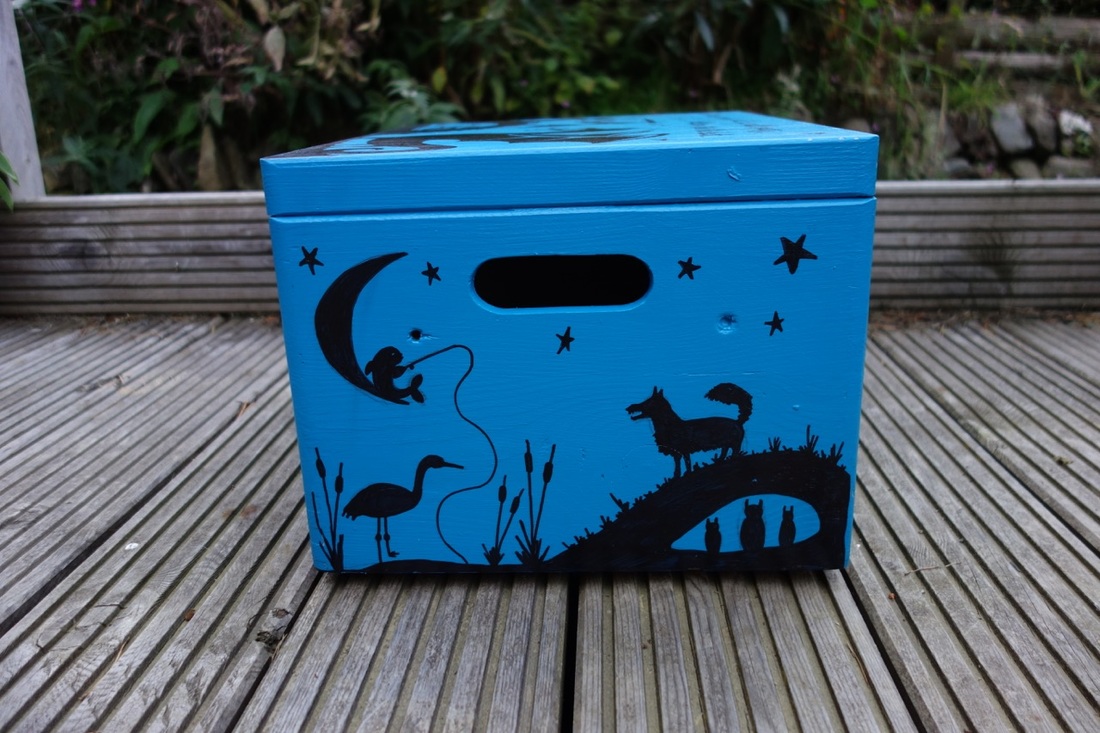 Finally we've got Gwen the dog channelling her inner wolf and howling at the moon. We regularly get herons flying up the valley so I had to include one of those, and in a touch of whimsey the fish is acting as the fisherman.
I painted the box in 2 coats of the same Soft Sheen Vinyl Emulsion I used on my stair wall, and then sketched the rough design in pencil. After that I drew over it in permanent marker and went back and rubbed out the pencil where it showed through. It ended up needing a coat of varnish because permanent marker turns out not to be water resistant! I've now got an even more Snazzy box to take my Hansen out and about in, and overtime I look at it I'll get some little reminders of home. The box, in case you're wondering came from this Ebay shop. Sometimes you get the pleasure of trying out something a little bit special. A piece of our social history. Special thanks to wrigglefingers who owns the wheel, and is kind enough to let me play on her. 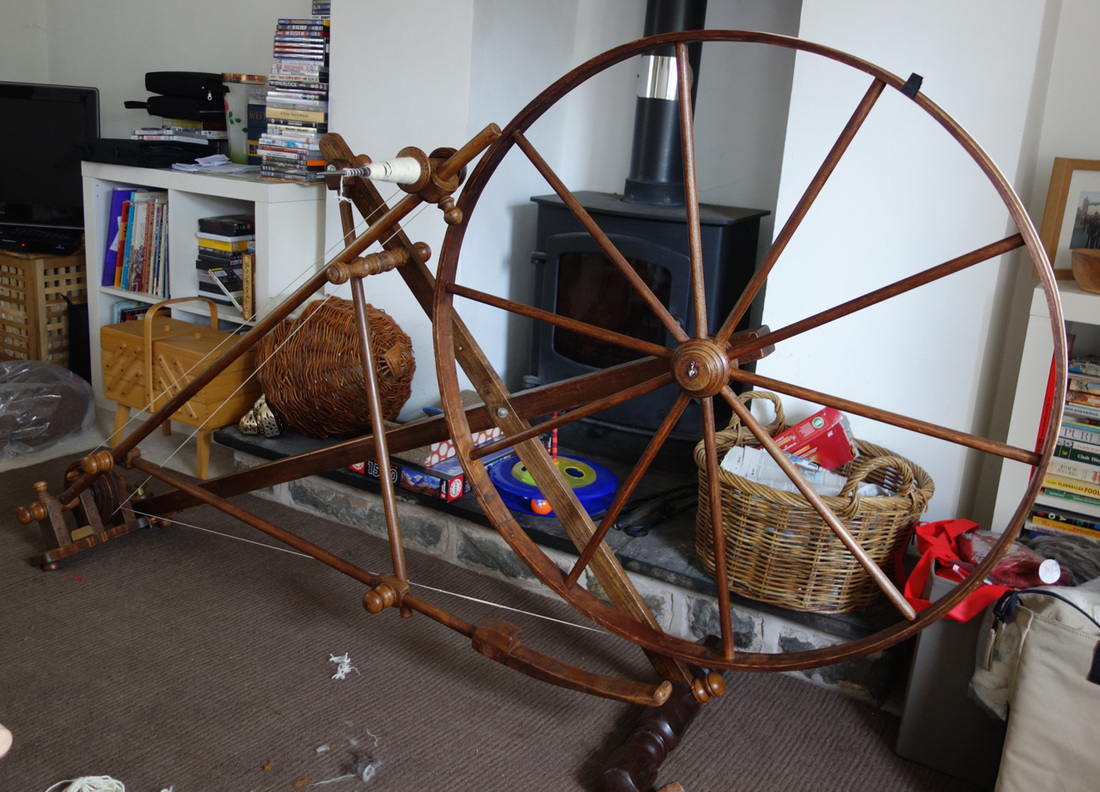 Meet Wilhelmina. She's a sort of form of Pendulum wheel, though given the arm swings from below rather than above pendulum is the wrong word to use. The other night we settled on Inverted Pendulum wheel, but further discussion on Ravelry reveals that it's true name is a New Dominion Wheel, patented in Canada in 1870. Pendulum Wheels were a development on the Great Wheel, they allowed the spinner to be seated while spinning, and extended the length of the long draw which makes the thread more even in twist levels. In this wheel though instead of the flyer arm being suspended from above, the pivot point is at the base. As ever, a video speaks louder than a thousand pictures, here's Wilhelmina in action. I'm definitely not brave enough to be filmed spinning on her yet, I naturally long draw with my right hand, and while I can do it left handed I am very rusty. Judith in these videos does historical re-enactment, and is an expert on a Great Wheel. Give me time though... because spinning on Wilhelmina is joyous and such fun. At the base is still a foot lever, but instead of pressing down on it you slide your foot away from you, and then draw it back when you want to wind your length of yarn on to the spindle. Spinning on it is not dissimilar to patting your head and rubbing your tummy... find once you get in the rhythm, pause for a moment and actually think about what you're doing and all is lost! 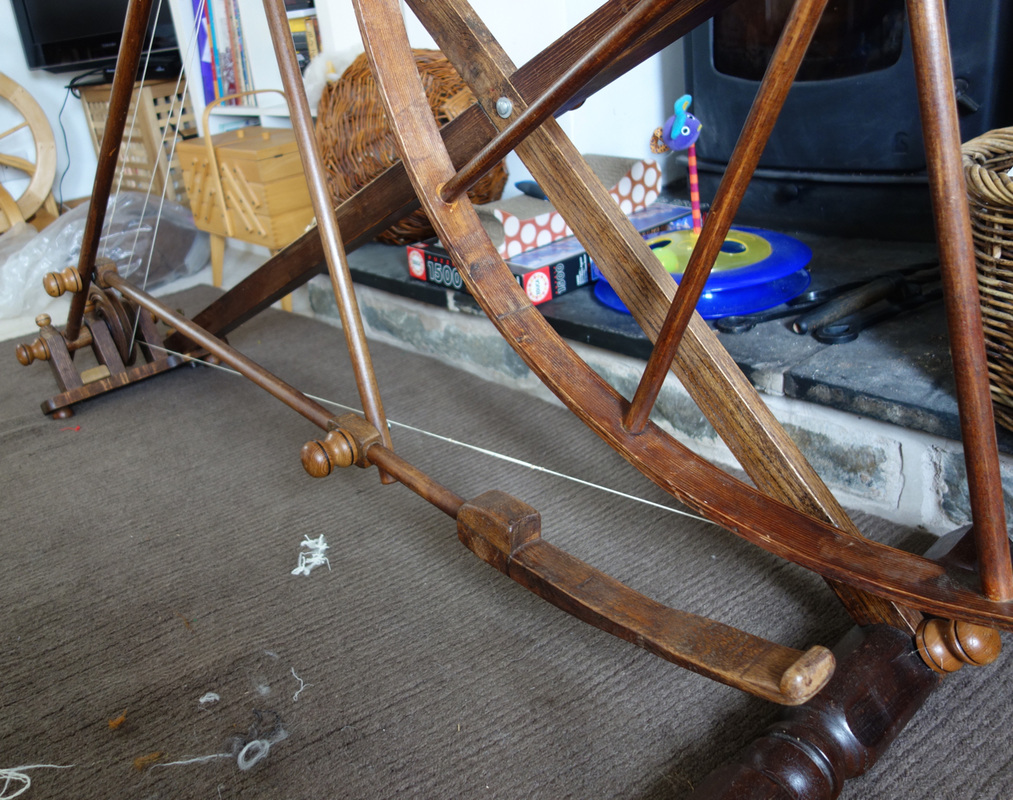 Wilhelmina was built by the late Bill Gaylor who was a retired Switchgear Engineer. He built quite a few unique wheels, believe it or not this isn't the strangest of them. Jill owns another one of his wheels that's even more fabulous. What I particularly love about Wilhelmina is the obvious use of found bits of wood that have been squirrelled away for the perfect use... 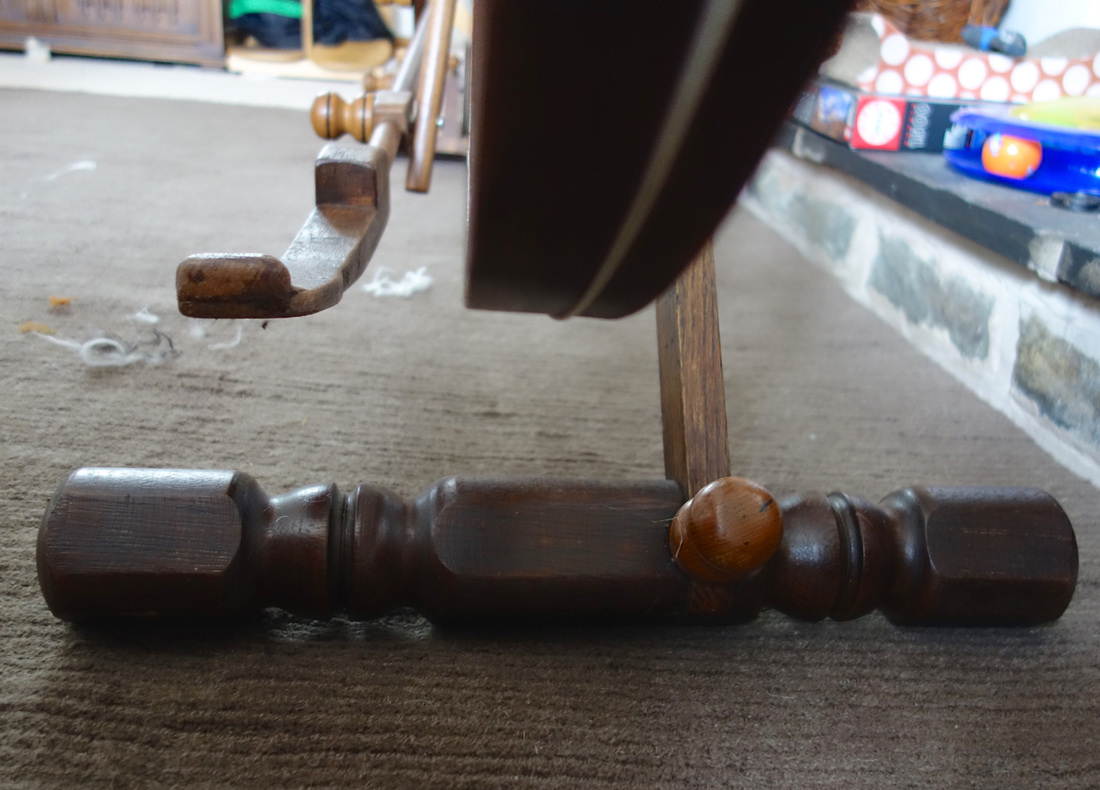 The main base is very clearly a table leg, possibly off an old pub table judging by the colour and weigh of it. The swinging arm looks pretty much like a broom handle, or maybe a very long length of dowel. The knobs look suspiciously like drawer handles to me! 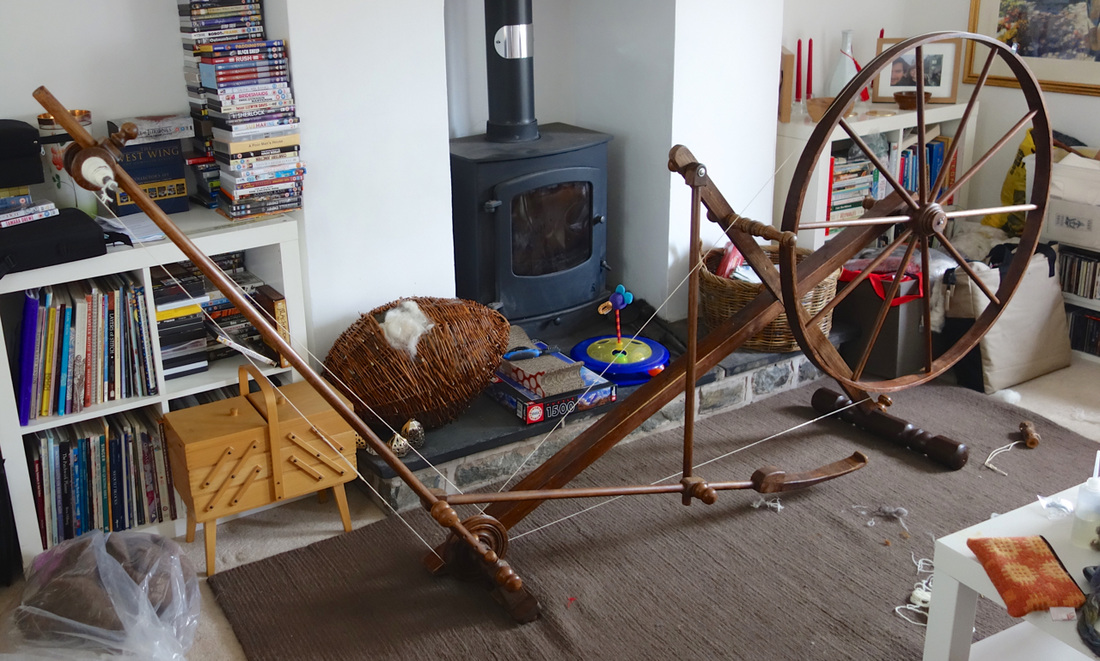 Even more wonderfully, the spindle still contained some yarn spun by Bill himself. 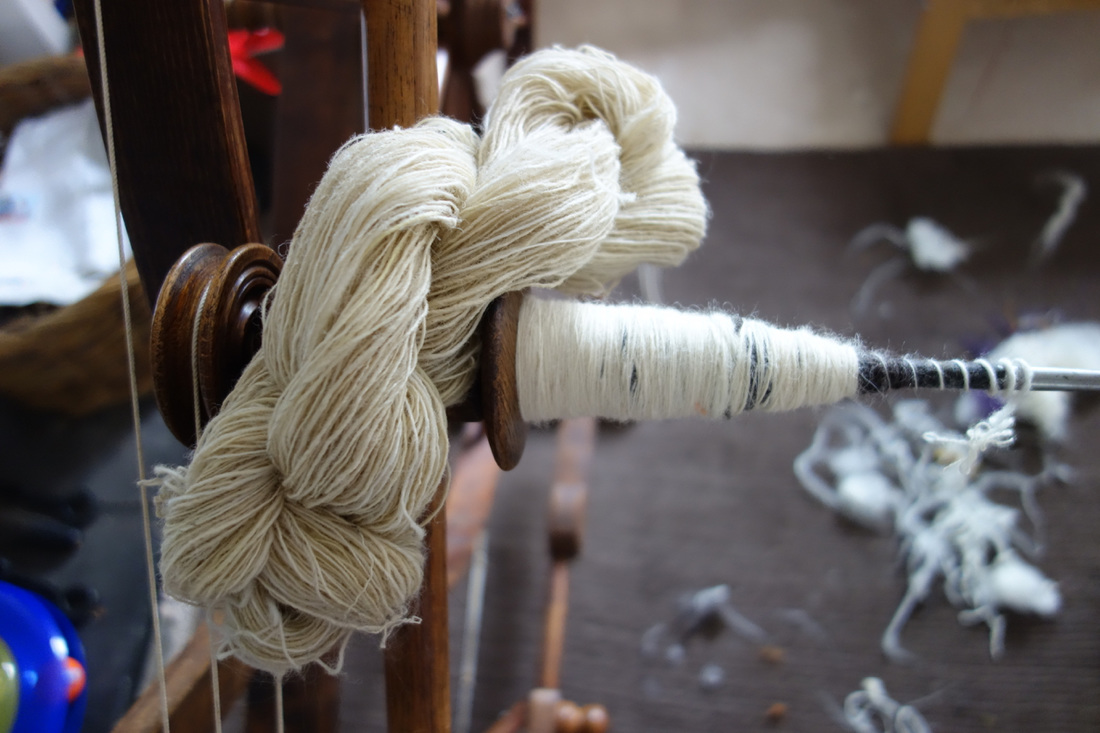 It has all the hallmarks of a length of yarn spun while demonstrating, we know Bill was an expert spinner from the other bobbins we have that are from the other wheel, this one clearly has bits where people have stopped and started, and he's discussed how the wheel works. We're trying to work out how to get Wilhelmina out and about once more, for all her size she's actually pretty portable as she dismantles quite easily. First event could well be the Montgomeryshire Guild Open Day on November 14th, but we need to do some planning first. The UK has a greta history of independent wheel makers, and Dot from YarnMaker is trying to build up a bit more of a database about them. If you own a 20th century British made wheel I'm sure she'd love to hear from you. On a personal note I'm trying to find out more about my Easy Spin Wheel for the website, It appears in a book by Eileen Hobden from the 1980’s, but at present I don’t have a makers name, though Eileen was a member of East Sussex Guild, does anyone know anything more? 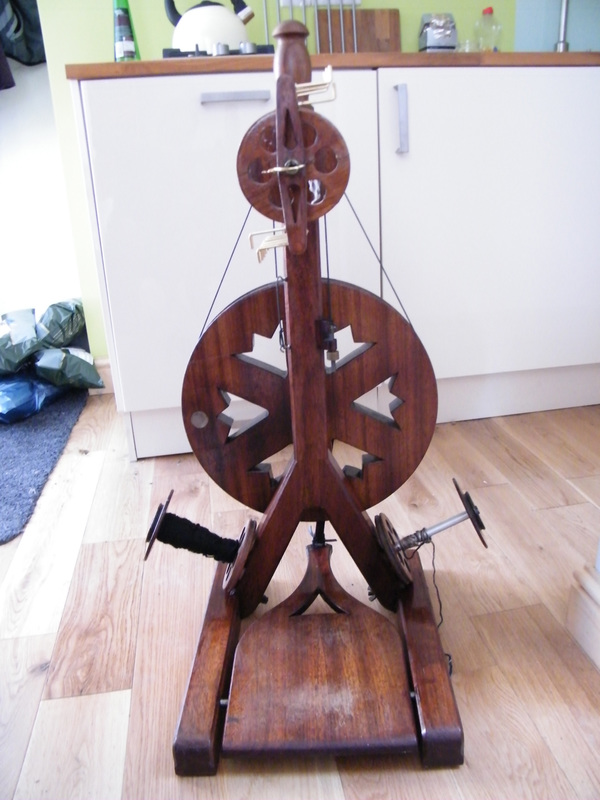
I've not been at home much in August... here's what I was getting up to. It's a long post, but I crammed a lot in to 10 days away from home.
Looks like the new website is working out rather well. So far no major issues, and the new design seems to be a hit. So, to celebrate I'm going to host a giveaway. The summer edition of Ply magazine came out a few weeks ago, and I have an article in it. It's based around my technique of spinning silk lace weight with lower levels of twist. 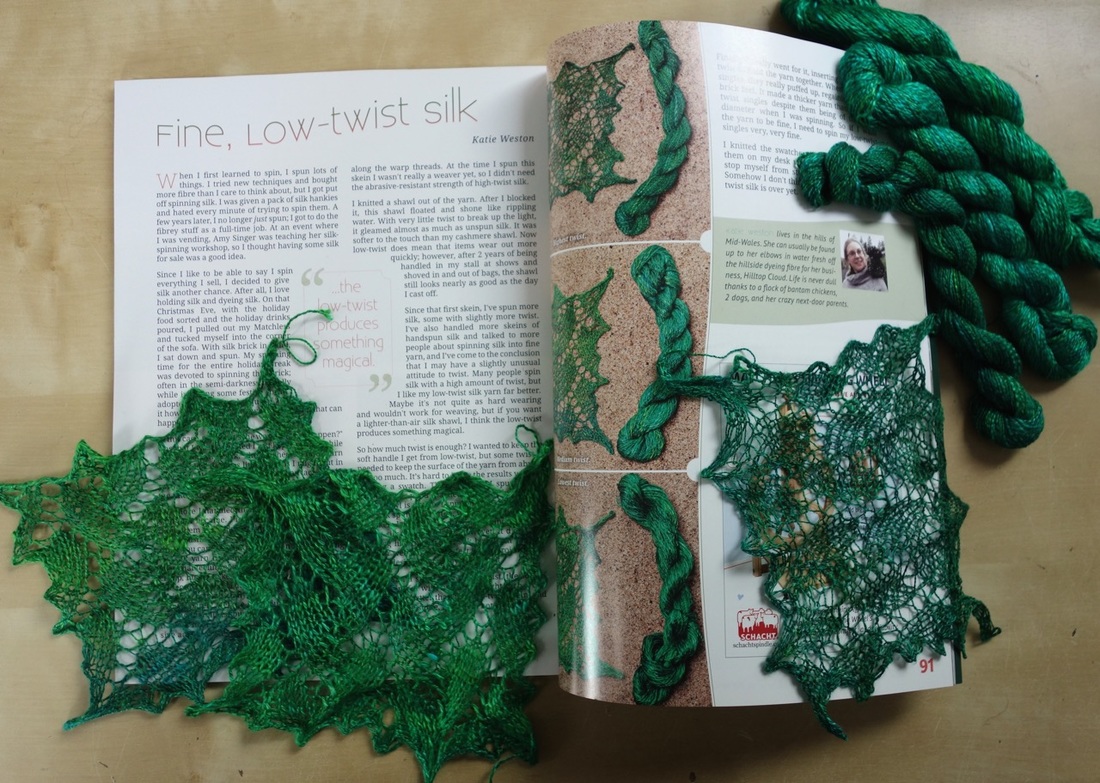 Of course one of the issues with print is that the image size is limited, so I thought I'd share some shots of the samples in a bit more detail. High Twist 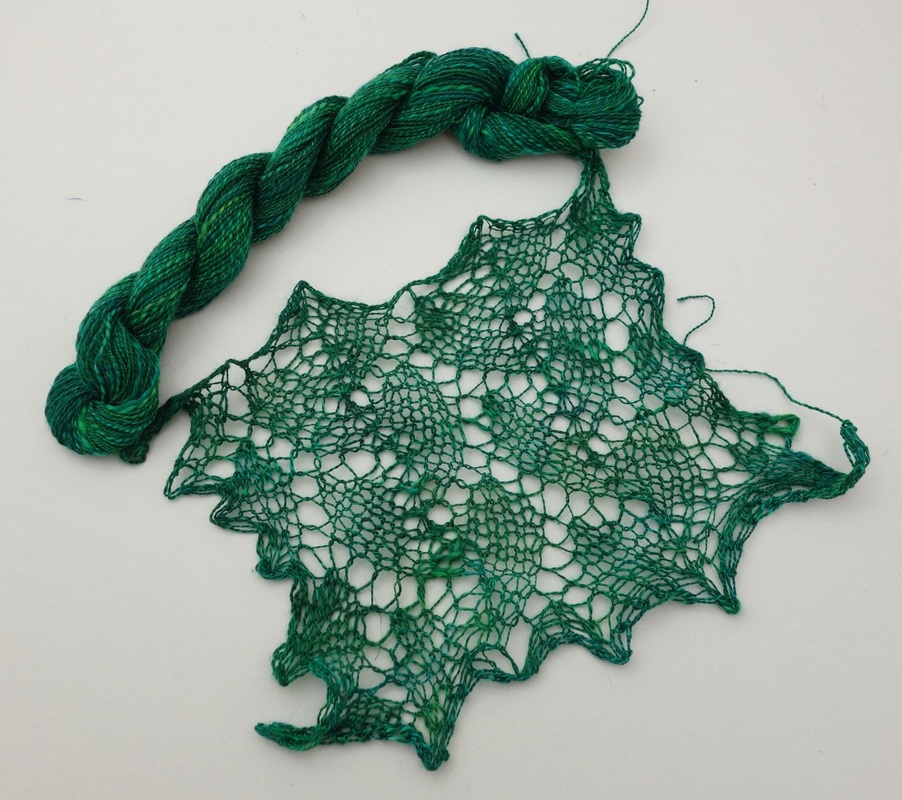 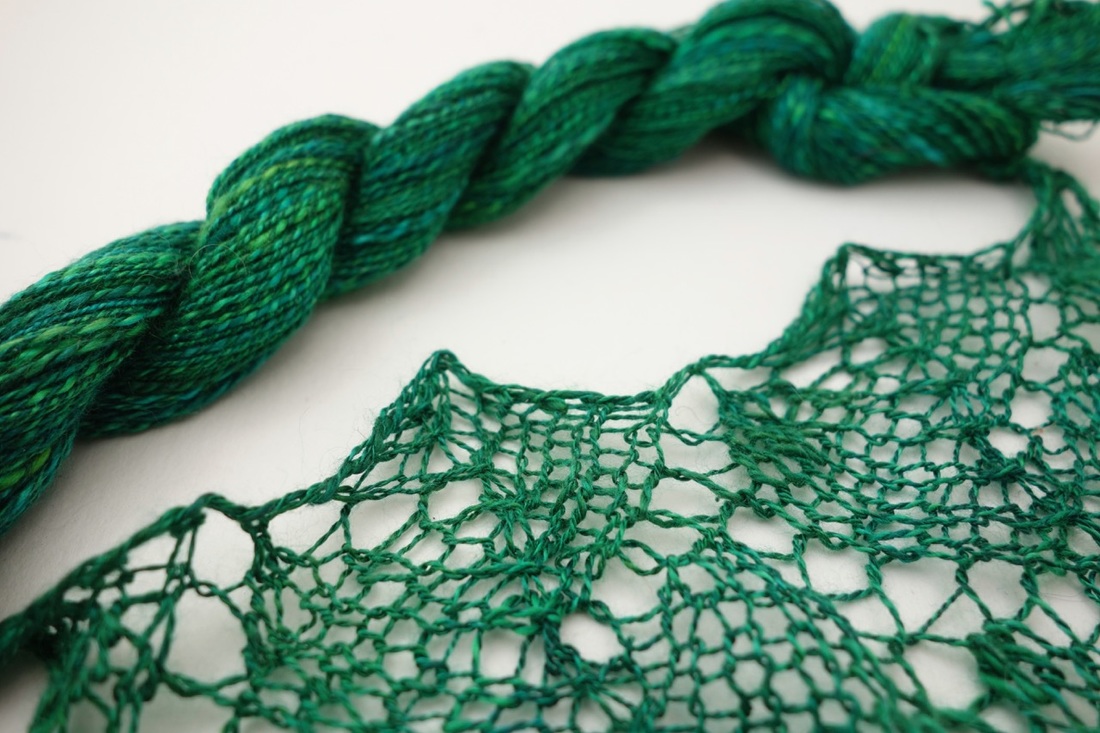 Medium Twist 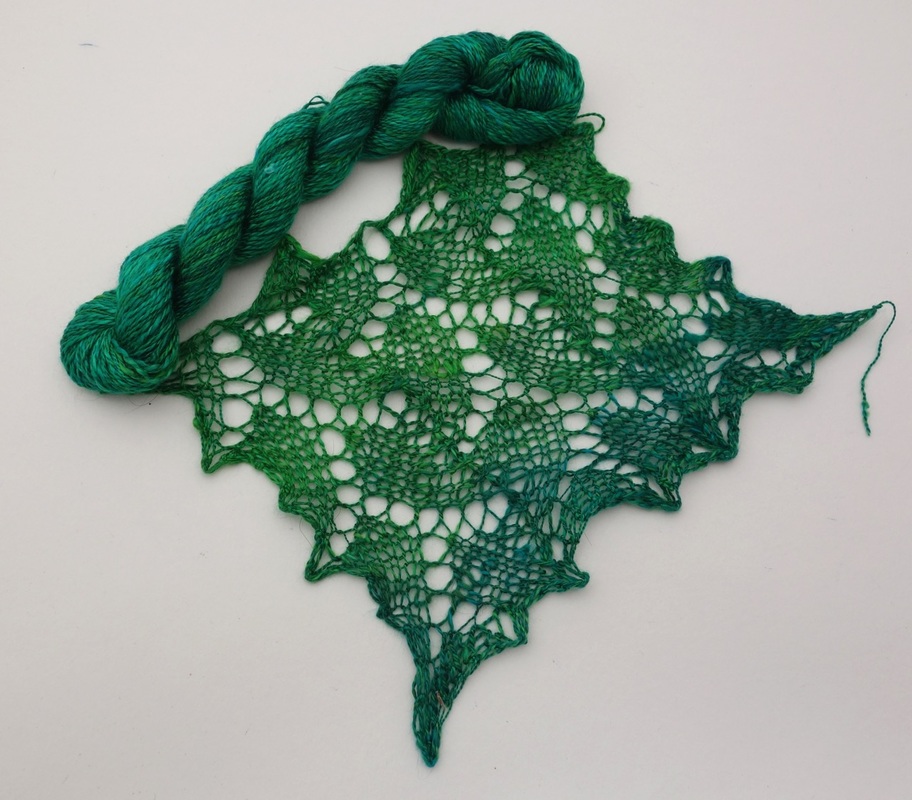 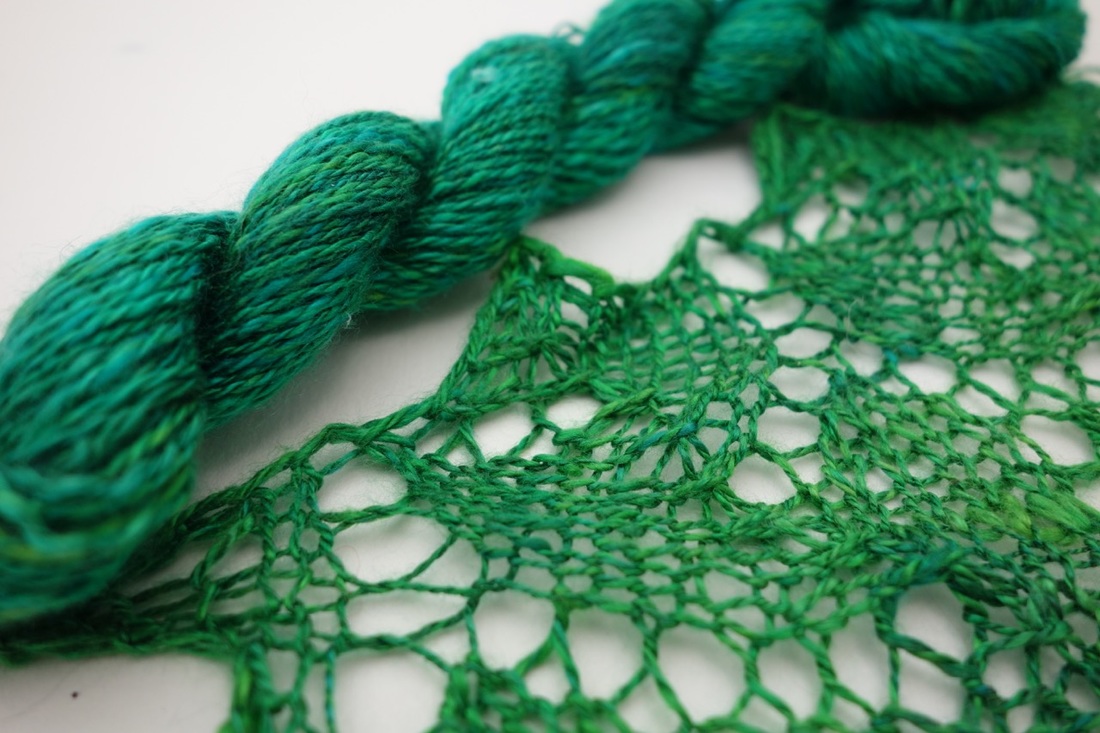 Low Twist 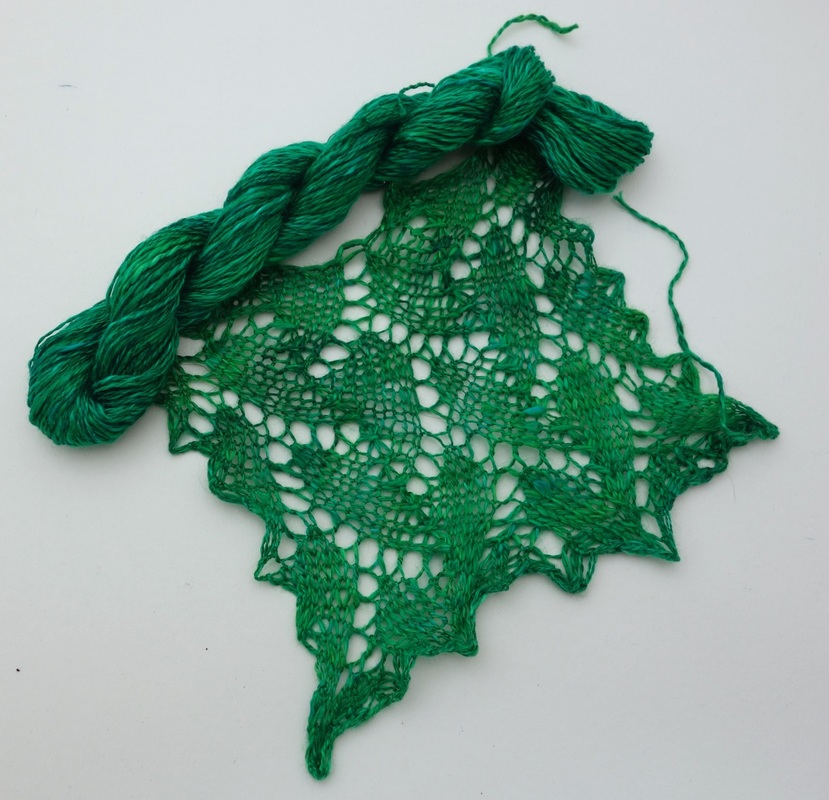 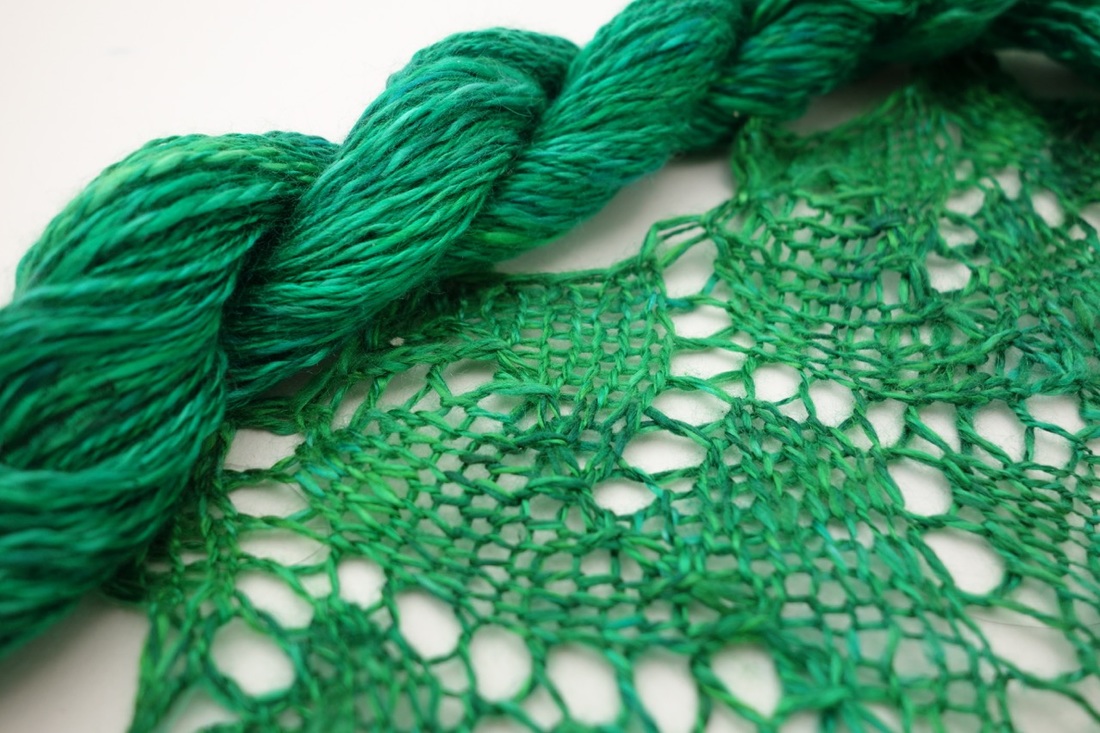 Of course to get the full details you'll have to read the article!
If you don't have a subscription here's your chance to get a copy of this edition. To enter all your have to do is leave me a comment with the details of the finest yarn you've ever spun. I want to know metres it was per gram (take the total meterage and divide it by the total weight of the skein), and what it was made from. If you don't include both those pieces of information your entry won't count! All yarns count, no one is judging, we all spin different yarns for different purposes, and have different levels of experience. Entries close at midnight (BST) on Thursday 16th July 2015. |
Archives
January 2024
Categories
All
 |
 RSS Feed
Hilltop CloudHilltop Cloud- Spin Different
Beautiful fibre you'll love to work with. Established 2011 VAT Reg- 209 4066 19 Dugoed Bach, Mallwyd, Machynlleth,
Powys, SY20 9HR |
|